


March 19, 2026
Phil Barker
Science, Survival, and Staying in Motion
Myeloma Canada: Tell us a bit about yourself
Phil Barker: My name is Phil Barker. I’m 65 years old. I’ve lived in Canada most of my life, with a few years in the US during my training. My wife and I have been married for 30 years, the second marriage for both of us. We’ve blended our families: two kids each, plus a “late addition.” They now range from 16 to 38 years old.
Professionally, I was trained as a scientist. I started my first faculty position at McGill in 1994 and spent over 20 years at the Montreal Neurological Institute. I later moved to UBC, where I held an executive role for about a decade. Now I’m back in the research trenches, working as a scientist again, which I love. My work focuses on signals that determine whether cells survive or die, particularly at the intersection of neuroscience and cancer.
MC: How did your path to a myeloma diagnosis unfold?
PB: I was back in Montreal in 2018 for a camping trip with friends. It was a fairly physical trip, and I started having rib pain. I brushed it off, assuming I’d pulled something. But when I returned home to Kelowna, BC, the pain continued and gradually worsened. I made several visits to my physician, and the back and rib pain were attributed either to overuse or aging. The doctor I had at the time thought my odd blood work was due to an internal bleed.
By the end of the year, I had severe pain and could barely walk. A pathology report eventually revealed extremely high protein levels in my blood. This was discovered in the pathology lab through observation of “rouleaux formations,” stacks of red blood cells caused by excess protein. That led to further testing, including a bone marrow biopsy and serum protein electrophoresis, which confirmed myeloma.
By that point, I had five fractured vertebrae, six broken ribs, and needed a walker to move around the house. In January 2019, I began CyBorD (cyclophosphamide, bortezomib, and dexamethasone) for six months. It worked well. I was able to return to work in March 2020, then underwent my first stem cell transplant in Vancouver that June. A few months after that, I went on lenalidomide maintenance for several years.
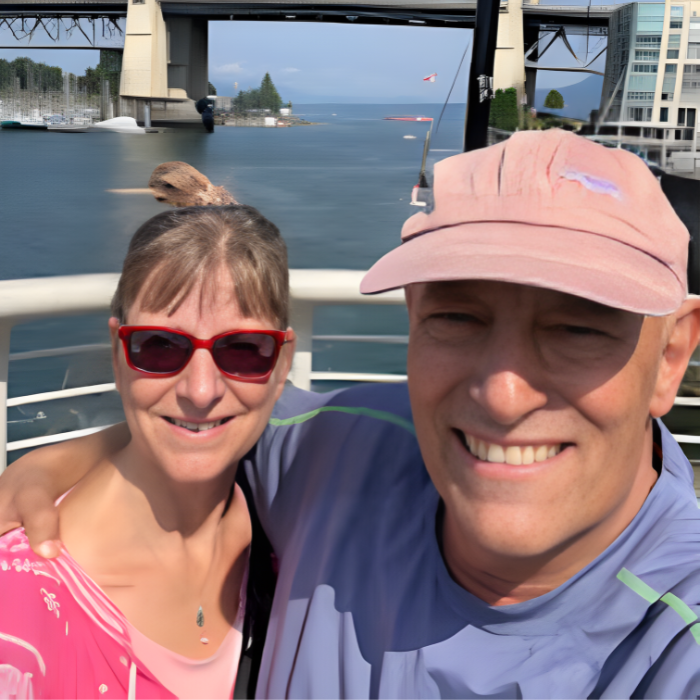
[Photo: Phil and his wife Christine, 2.5 weeks after his second stem cell transplant]
Eventually, as is common with myeloma, I relapsed in late 2023. After trying a few approaches, I went on isatuximab, along with carfilzomib and dexamethasone, and that was followed by a second stem cell transplant in June 2025. The treatments worked well, and I’m essentially in remission now. I’m on bortezomib maintenance and returned to work in August 2025.
It’s been almost eight years since my diagnosis.
Working and Living with Cancer
MC: What has it been like to work and live with cancer?
PB: I’ve felt very supported by my colleagues. Aside from times when treatment required me to step away, I’ve continued working throughout. For many scientists, the lab is a source of joy. You get to discover new things and work with amazing people. That’s true for me, and work has helped me feel engaged and useful.
The biggest change was travel. My executive role at UBC required a lot of it, and after my diagnosis, I had to significantly reduce that. Then COVID arrived and changed everything anyway. But overall, I’ve been fortunate. I’ve been able to continue doing meaningful work without major limitations.
MC: How has your scientific background shaped the way you navigate life with myeloma?
PB: It’s helped a lot. I can dive into basic research and understand how treatments work. Lenalidomide, for example, has a complex mechanism of action that happens to fall squarely within my area of expertise. I can read clinical studies and understand their implications, which leads to great conversations with my care team. They put up with a lot of questions!
But I’m very clear on the fact that I’m not the doctor. I trust the decisions of the clinicians treating me.
Where my background has been especially useful is in my role on Myeloma Canada’s Independent Research Review Committee (IRRC). I’m not a myeloma specialist, but I’m a basic biomedical scientist. Reviewing grants has let me contribute meaningfully while also learning a tremendous amount about the cutting edge of the field.
Contributing to the Future of Myeloma Research
MC: How did you become involved with Myeloma Canada and the IRRC?
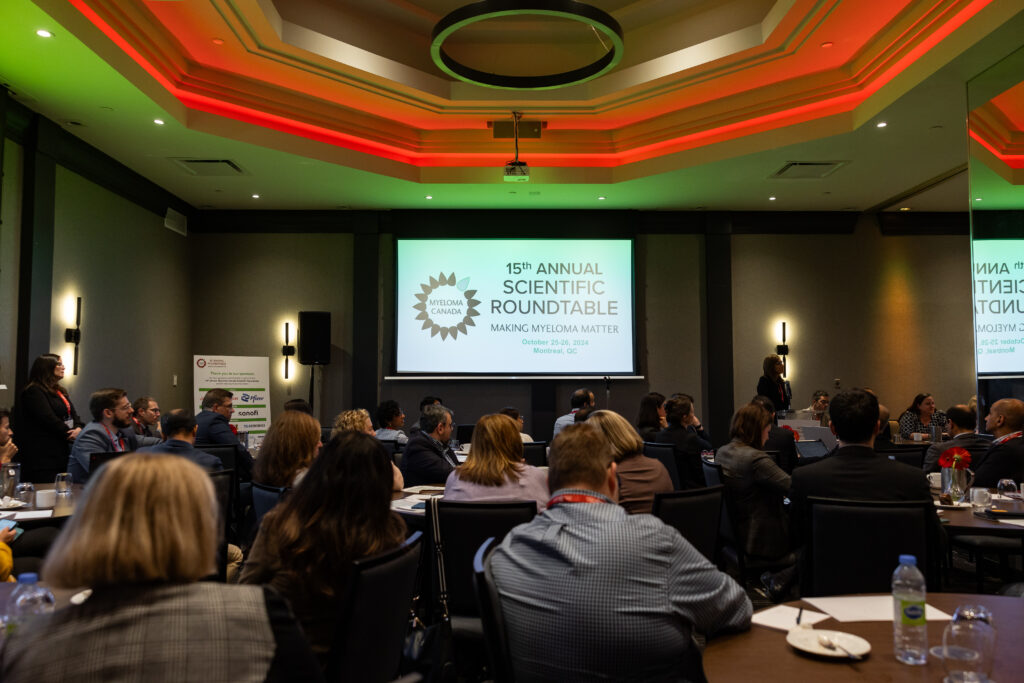
[Photo: Myeloma Canada Scientific Roundtable in 2024]
PB: I reached out. I wanted to contribute to the community in a way that fit my expertise. Communications or fundraising aren’t my strengths. I’m a scientist. So, I contacted Martine Elias (CEO), who connected me with Gabriele Colasurdo (Director of Science and Research). That led to an invitation to the Myeloma Canada Scientific Roundtable in 2023, and eventually I began reviewing grants. I’ve been doing it ever since.
MC: You’re now entering your third year on the IRRC. What keeps you coming back?
PB: The quality of the research and team of reviewers on the panel. I review grants for many agencies, including the Canadian Institutes of Health Research, and the proposals I see in the myeloma field are outstanding. There is not enough funding to support them all, but if there were, every one of them could move the field forward. Myeloma Canada has done a great job of pulling together experts who give each application a thorough review.
I also bring both a scientific and a patient perspective, which I hope is helpful. There’s a balance between innovative long-term projects, work that could transform treatment in 10 years, and research that can improve quality of life for patients right now. Being part of the careful decision-making that shapes that balance is both meaningful and gratifying.
MC: When you review myeloma research proposals, what indicators tell you that a project has real potential to improve patient outcomes?
PB: It’s a complex rubric, but here’s one example: many treatments we use today, such as bispecific antibodies and others, have significant side effects. Often, the dosing used in the clinic is based on what was established in a trial, but that doesn’t mean it’s the optimal dose for long-term use. Clinical projects that investigate how to maintain effectiveness while reducing toxicity can have a direct and immediate impact on patients’ lives.
At the same time, there’s exciting work happening to improve therapies like CAR T for myeloma, where they aren’t yet as effective as in other cancers. Wet bench projects that push us toward significantly better long-term outcomes are also a priority.
It’s always about balancing immediate patient benefit with future innovation.
MC: Do you see any parallels between your own research and the innovations happening in myeloma research?
PB: A little. One area my lab focuses on is chemotherapy-induced-neuropathy. Many chemotherapies, such as paclitaxel in ovarian cancer treatment, can cause severe and sometimes lasting nerve damage. Chemotherapy-induced-neuropathy can also occur in people with myeloma, though usually to a lesser degree.
What isn’t well understood is why this happens mechanistically. Oncologists are trained to treat and extend life, not necessarily to investigate side effects at the cellular level. We’re trying to understand those mechanisms and identify interventions that might protect the nervous system without reducing the effectiveness of chemotherapy.
Supporting Canadian Research Capacity
MC: Your work as an administrator and as a scientist suggests a strong commitment to education, mentorship, and building research capacity in the Okanagan region. Is that accurate?
PB: Very much so. In my previous role, I worked to ensure UBC Okanagan could be a leading research institution, which meant creating an environment where faculty could thrive. That includes not only university infrastructure but also regional partnerships, for example, collaborations with BC Cancer, the City of Kelowna, local engineering and tech firms, and wine producers.
Now that I’m back in the lab full time, my focus is narrowed but just as meaningful. Being able to do science while mentoring trainees is a privilege that I am grateful for. I love helping students grow from curious undergraduates into fully fledged scientists.
MC: What do you hope the future holds for myeloma research?
PB: Myeloma is on a very promising trajectory. Myeloma Canada’s goal of making myeloma a curable disease feels within reach. As an example, at the latest American Society of Hematology (ASH) meeting, studies combining bispecifics with drugs like daratumumab showed impressively deep and long-lasting responses.
Beyond that, innovations such as mRNA therapeutics are showing promising early results in other cancers. When you look ahead 10 or 20 years, the potential is enormous, not just for myeloma but for other difficult cancers like glioma and pancreatic cancer.
Personal Support: Family, Friends, and Care Team
MC: Tell us about your support system?
PB: Absolutely. My wife has been extraordinary, steady, compassionate, unyielding in the best way. My family and friends were incredibly supportive from the beginning. Work colleagues have been uniformly supportive. Myeloma may affect one person, but it takes a community to navigate it — mine has been extraordinary.
I also want to acknowledge the phenomenal care I’ve received. My oncologist, Dr Topic; my nurse practitioner, Jessica Robertson; and the team at Vancouver General, including Dr Forrest, who has overseen both of my transplants. They’ve managed everything exceptionally well, including fielding all my scientist-level questions.
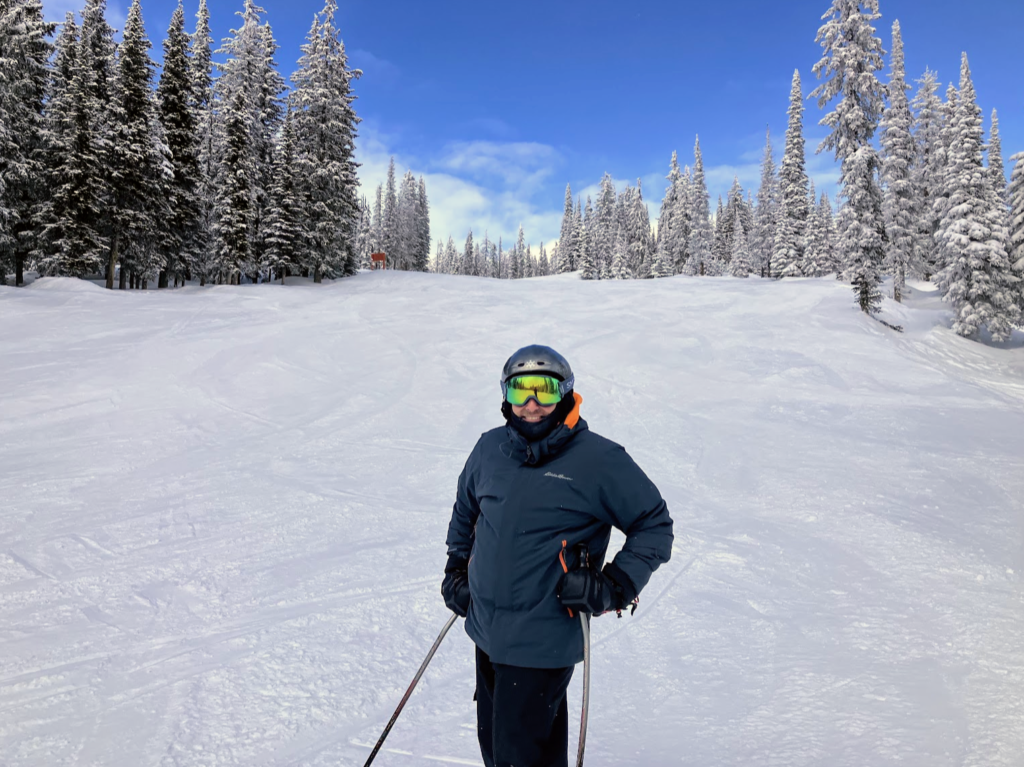
[Photo: Phil on the slopes]
I’d like to share something for newly diagnosed patients. When I was first diagnosed, with many fractures and intense pain, I was told my physical prognosis wasn’t great, and that I likely wouldn’t ski or golf again. But “keep moving” has always been a family motto. So, I did. And today I’m skiing, golfing, strength training, and walking daily through our very hilly neighbourhood. I’m not saying everyone’s experience will be the same, but I want people to know that the initial diagnosis and then navigating early stages is the low point with myeloma. There is real hope for the future.