


August 21, 2025
Lyzane Bissonnette
Where there's life, there's hope
Hello, my name is Lyzane Bissonnette and I was diagnosed with multiple myeloma at the age of 43. Married mother of two boys, primary school teacher, and former military reservist, I was a busy woman with a full life.
In September 2012, I told my family doctor about my recurring fatigue, believing it was a result of the pneumonia I had had six months earlier. Concerned, she sent me for blood tests. A few weeks later, I received a call from the hospital to make an appointment with a hematologist, but they didn’t give me any further details. When I arrived at the assigned location, I looked around at the people and the posters on the bulletin boards and realized I was sitting in an oncology waiting room! I started to feel stressed and scared because I had gone to the appointment alone as my partner Sébastien was out of the province for work, and I thought it was just a routine check-up.
I was seen by a hematologist-oncologist who told me that I had smouldering multiple myeloma that could become active at any time. I was in shock and would have loved to have Sébastien beside me to take the news and listen to the doctor’s explanations! The doctor was very empathetic and took the time to explain what myeloma is, as I had never heard the term before. He told me that my myeloma was smouldering, which meant that it was dormant and that there was nothing that could be done to stop or slow it down other than maintaining a healthy lifestyle (eating healthily, exercising, limiting and managing stress, and getting a good night’s sleep).
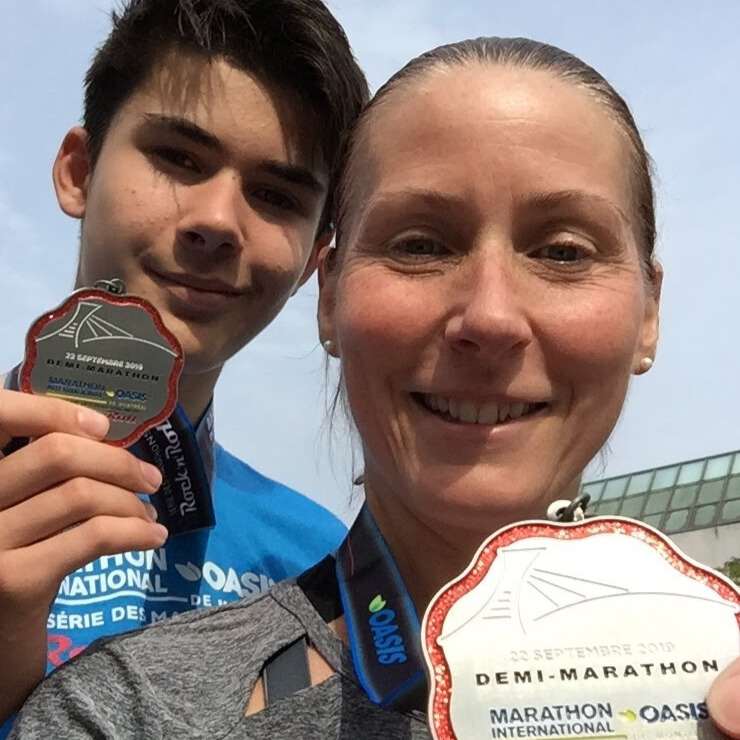
[Photo: Celebrating my 50th birthday by running the Montreal Half Marathon in September 2019. (7 months before the myeloma became active)]
As soon as I left the hospital, I rushed to call my partner to explain the situation, which was also a shock for him. It is important to mention that in the autumn of 2012, my sons were 7 and 9 years old. At that point, I made three decisions. First, I decided that I would not tell my family or anyone close to me so as not to worry them unnecessarily. I would only tell them when the myeloma became active. However, as I needed moral support, I confided in three close friends.
My second decision was to continue living life to the fullest by maintaining a healthy and balanced lifestyle. I chose not to wait for the myeloma to wake up. Life takes on a whole new flavour when you have a sword of Damocles hanging over your head. Finally, I also decided to take the bull by the horns and learn more about the disease by becoming a member of Myeloma Canada and the International Myeloma Foundation (IMF) and attending numerous conferences and webinars.
Following my diagnosis and biopsy, I learned that I had no chromosomal abnormalities, and I had medical appointments for over seven years to monitor its progression. In March 2020, at the start of the pandemic, while my partner was deployed overseas, I decided to start my spring running training with my son Nathaniel, an activity we both enjoy. Then, within a few weeks, I began to experience unusual sharp pains in my back, difficulty walking and even sleeping. I also started having intense seasonal allergies, which was new to me. I was sneezing constantly, which caused severe pain in my ribs and back. I contacted my family doctor and oncologist, and in June 2020, blood tests showed that the myeloma had become active. X-rays also confirmed that I had numerous bone lesions in my pelvis and spine. Even though I knew what myeloma was and was familiar with the innovative treatments available, it was still a shock to learn that the myeloma had entered an active phase, because for the first time, I felt like the clock had started ticking, that the famous ‘10-year life expectancy’ countdown had begun. The distress was also linked to the fact that my partner was still abroad and that his return home was difficult due to the pandemic and flights being constantly cancelled. What’s more, at that time, my children and friends could see me suffering physically, but I was waiting for Sébastien to come home to tell them about the diagnosis.
He finally returned home in early July 2020, and the day after his return, I broke the news to my two sons, Nathaniel and Florent, who were 17 and 15 at the time. Once they had absorbed the shock, in order to play down the situation, I explained to them that the famous ‘10 years’ was an average and that I was confident that I would exceed this timeframe thanks to advances in research. I also explained that 10 years is a long time and that I would still be around to mark their schoolwork, witness the start of their professional careers, and that they won’t get me off their backs yet!
I then underwent radiation therapy to reduce the pain caused by a large bone lesion in my pelvis. Shortly after, I began my induction treatment with three drugs (ixazomib, lenalidomide, dexamethasone) to avoid spending too much time in the hospital due to the pandemic.
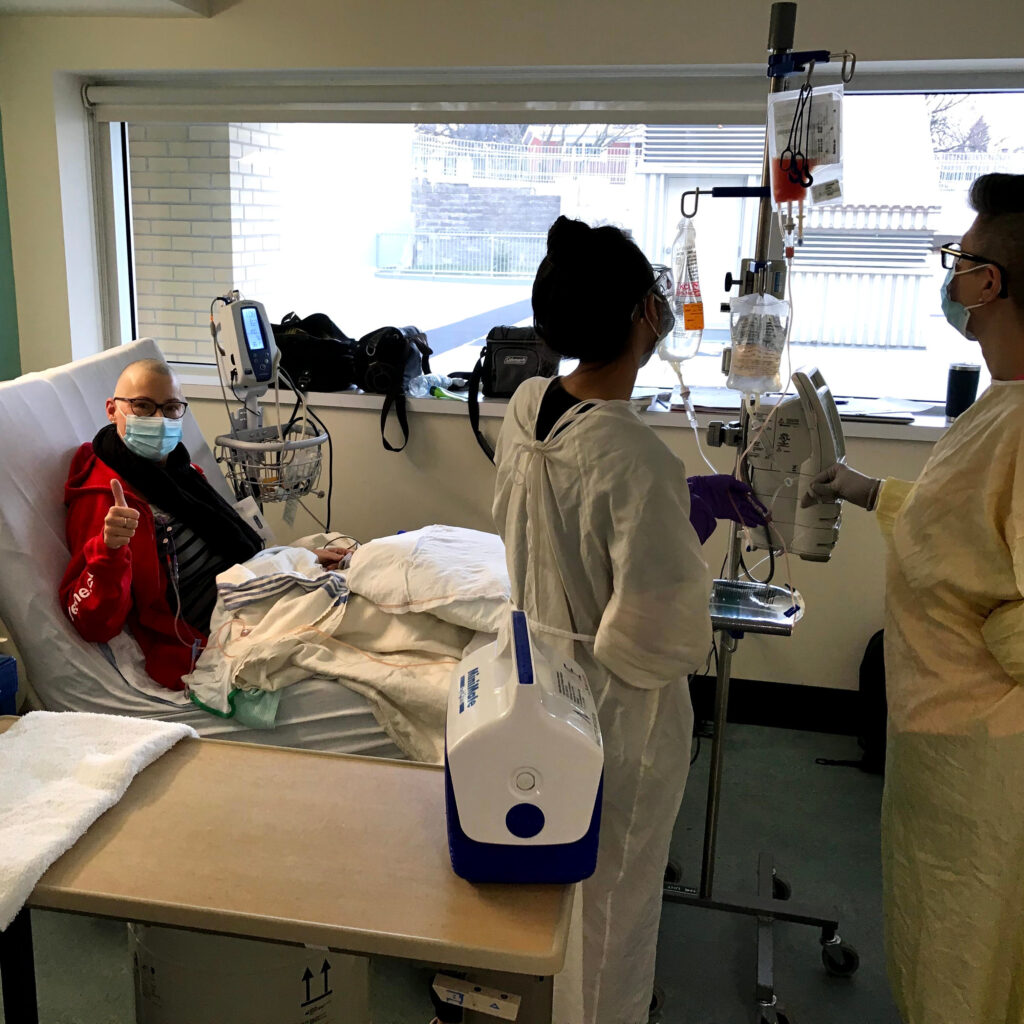
[Photo: Autologous stem cell transplant – December 2020]
In the meantime, to find support and comfort, I joined the South Shore Myeloma Support Group and also participated in many workshops offered by the Quebec Cancer Foundation. Myeloma has allowed me to meet some exceptional people. I became friends with other people with myeloma or other cancers, and it did me a lot of good to be able to talk to people who were going through the same thing as me.
In December 2020, I received an autologous stem cell transplant as an outpatient at Maisonneuve-Rosemont Hospital. It is not a trivial procedure, but it went well without too many complications. Close to the 100th day after the transplant, a pivotal moment for those who receive autologous transplants to find out if their ‘M-spike’ (monoclonal peak) is at zero, I learned that the autologous transplant had not produced the expected results.
Despite a quick recovery, I had a partial response, as my monoclonal peak was at 5.7, exactly the same as BEFORE my transplant. For the first time since the start of my myeloma saga, I felt discouraged and feared that the end would come sooner than expected.
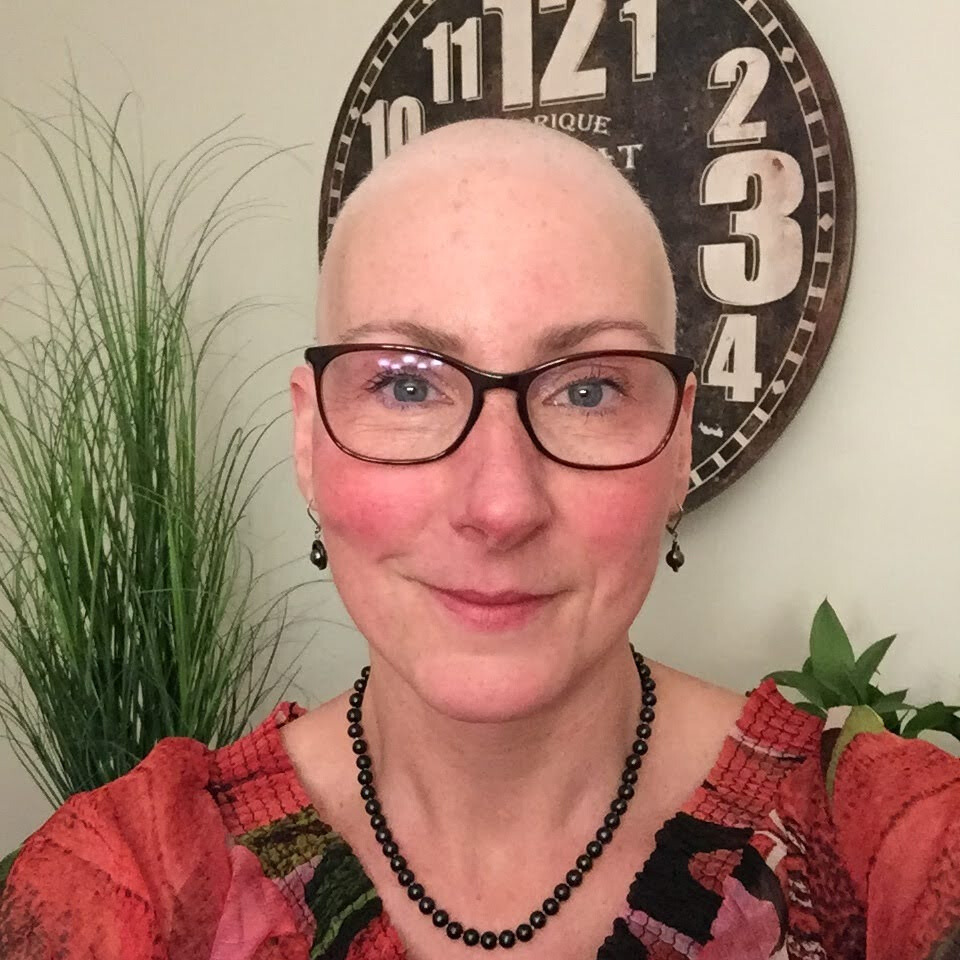
[Photo: Two months after my autologous stem sell transplant – February 2021]
Fortunately, a few days later, during an appointment with my oncologist at my local hospital, he reassured me and restored my confidence by telling me that it was possible to resume the three drugs used for induction therapy after the stem cell transplant given the good response they provided.
Two months later, I learned that I was in complete remission, as the myeloma was undetectable in my blood tests. Since then, I have been taking lenalidomide daily as maintenance treatment. I also have blood tests and medical check-ups every three months, as you never know when the disease will return. However, I hope that will be as far in the future as possible. That’s why I’m living life to the fullest!
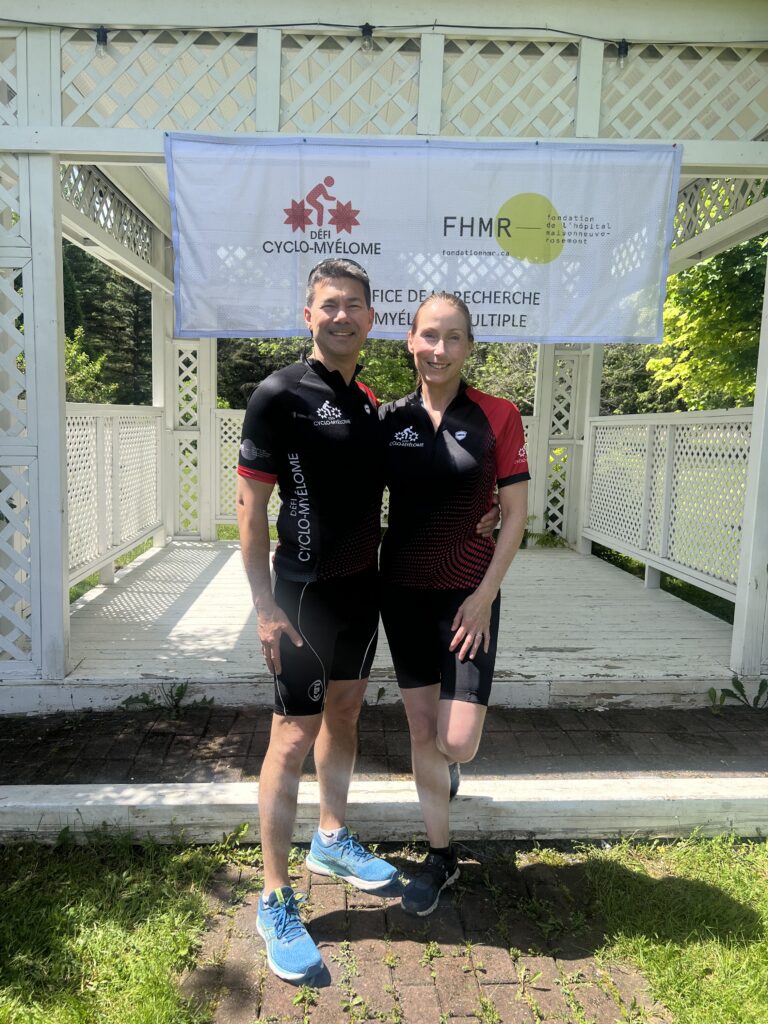
Since the fall of 2021, I have been co-leader of the South Shore Myeloma Support Group where I give back by organizing awareness activities and fundraisers.
I wanted to get involved to support patients and caregivers affected by myeloma, to inform more people about this incurable disease, and to raise funds to find a cure.
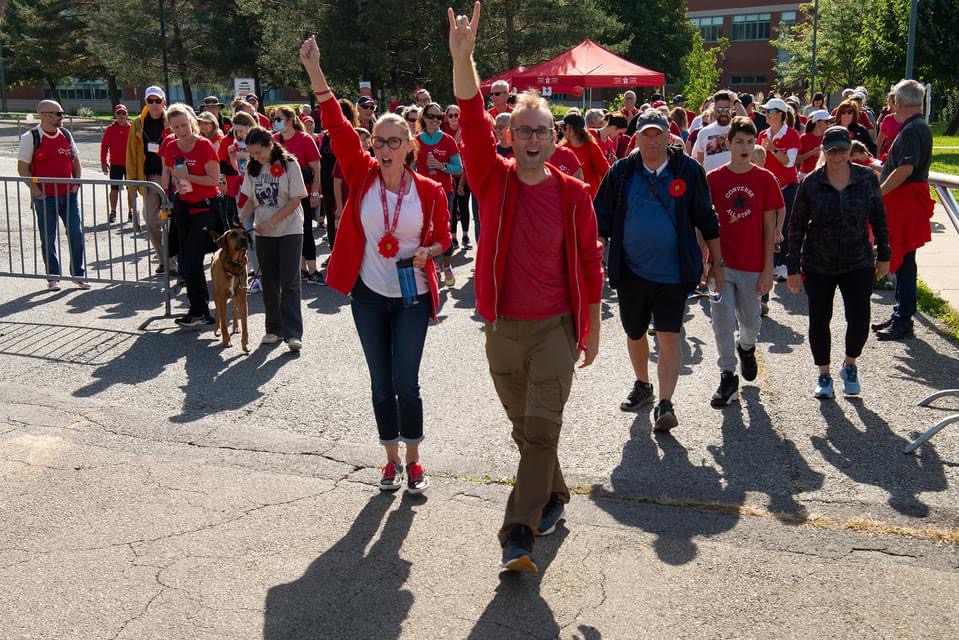
[Photo: South Shore Multiple Myeloma March – September 2023]
It’s important to me to raise awareness about myeloma within my community so that the public and authorities are have to face the disease. I also returned to teaching in May 2022, first part-time and then full-time at the end of August 2022. In 2024, I was also approached by the Charles-Le Moyne Hospital to become a patient partner. I helped write information documents for patients who were going to receive an autologous stem cell transplant.
Finally, since last July, I have been part of Myeloma Canada’s Ambassador Network, helping to advance Myeloma Canada’s mission by participating in awareness activities, building relationships, and promoting community engagement.
Despite the challenges associated with myeloma, I am very grateful for the advances that have been made in myeloma research. Being diagnosed with myeloma was a huge shock, and the fact that it was dormant for over seven years meant that I didn’t feel sick. During those years, I was able to live a normal life with my family while continuing my teaching career. What’s more, during this time, research has led to new and innovative treatments aimed at prolonging and improving the quality of life of patients, which is a source of hope. As the saying goes, “Where there’s life, there’s hope”.
Determined, positive, and proactive by nature, I am optimistic about the future. Over the past four years, I have developed resilience and gratitude. I am fortunate to have the support of Sébastien, my wonderful partner, my sons Nathaniel and Florent, my family, my friends and a fantastic healthcare team. I am hopeful that advances in research will allow me to continue to enjoy a long and fulfilling life until a cure is finally found.
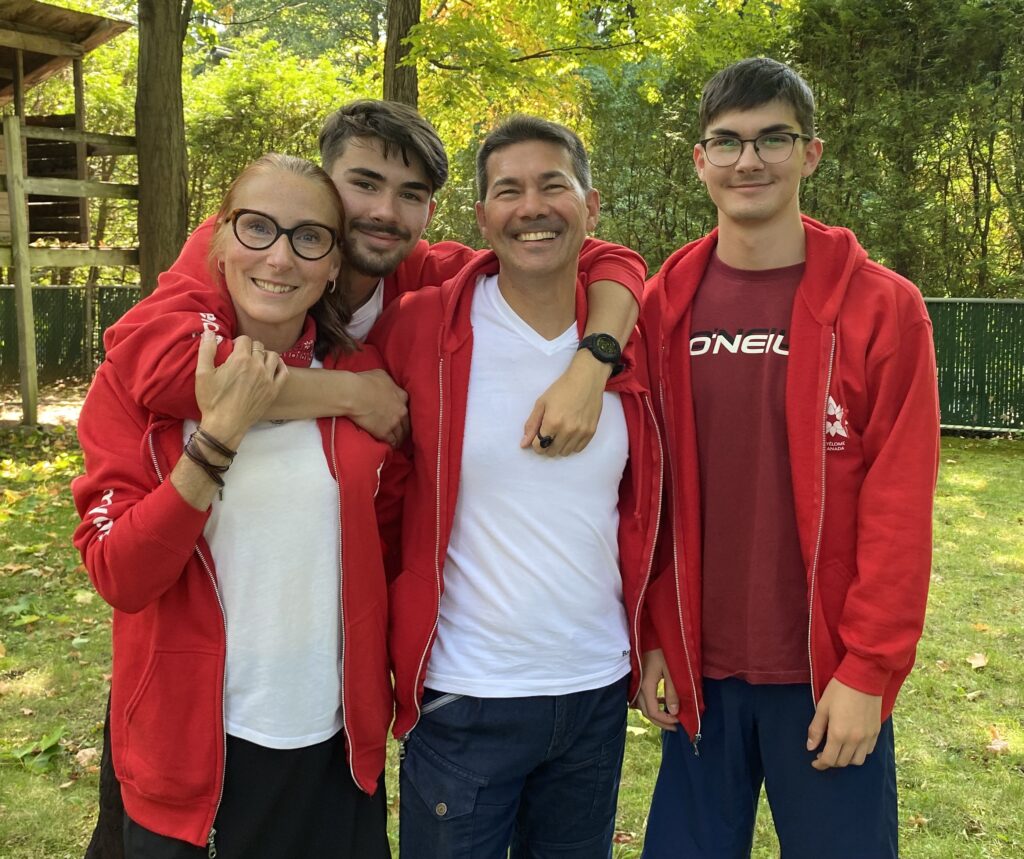
[Photo: The South Shore Multiple Myeloma March in Saint-Julie – September 2023]
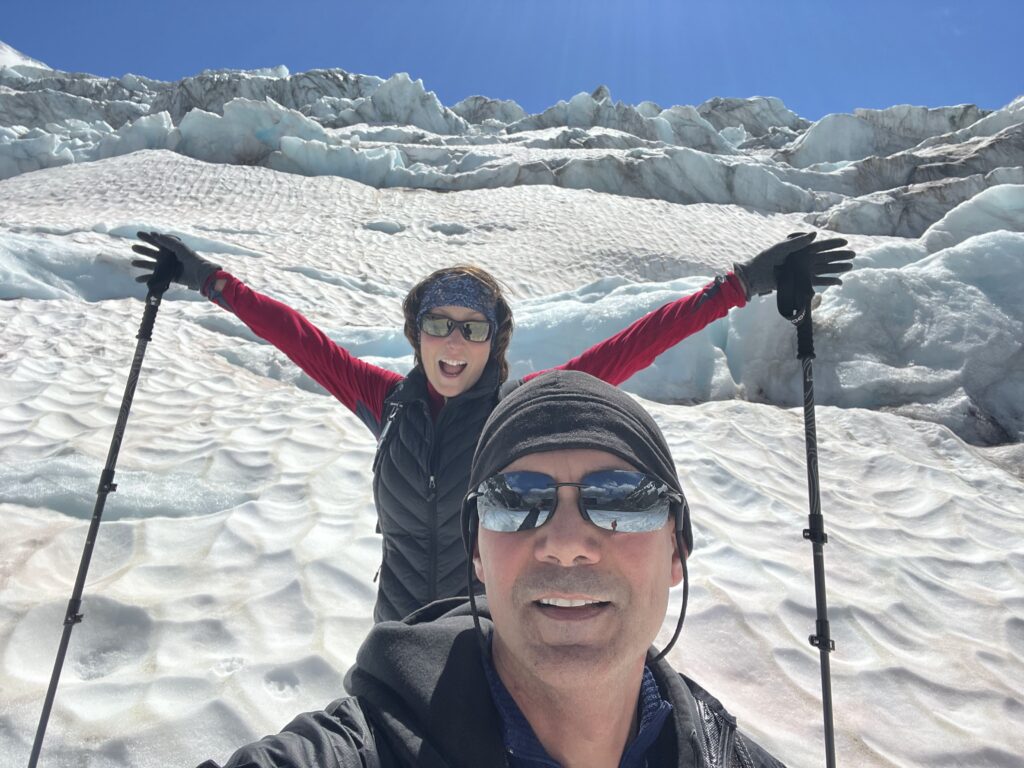
To date, I am still in complete remission, but I am aware that eventually the myeloma will return and I will have to roll up my sleeves again. Until then, I try to enjoy life to the fullest and fill days with beauty and happiness. Every day, I listen to my body without feeling sorry for myself and try to push my limits. I live knowing that I don’t know what lies ahead, but I have chosen to move forward and take on the challenge. Dreaming, having projects (big or small), travelling, spending quality time with my partner, my children, and my friends is what makes life so beautiful and precious, and I try to enjoy it to the fullest!
Lyzane