

June 18, 2026
Brent Smith
Finding Purpose and a Bronze Medal
Myeloma Canada: Tell us a bit about yourself, where you’re from, and your background.
Brent Smith: My name is Brent Smith. I grew up in London, Ontario, but I moved to St John’s, Newfoundland in 1993 to do a master’s in geography at Memorial University and ended up creating a whole life there. I was there for 30 years and only moved back to London three years ago. I essentially lived half my life in St John’s and half in the London area. I’m fortunate because I feel I have two homes.
Career-wise, I worked in community economic development and the not-for-profit sector, including the Canadian Cancer Society and Easter Seals. I also did some anti-tobacco health advocacy work in Ottawa and St John’s. Then I started my own chocolate company about 20 years ago. The Newfoundland Chocolate Company is still running, and one of my sons is employed with it. It’s a very proud Newfoundland company, and building something so loved there was a wonderful, wonderful chapter of life.
MC: When were you diagnosed with myeloma, and how did it happen?
Brent: It was April 29th, 2020, just about a couple of months into COVID. I’d been suffering from back pain for years and years and years. But I was always banging myself up playing sports, so I’d just pop ibuprofen and muscle through.
Then I slipped on a stair, fell down, and thought I’d separated my shoulder. When I got in for an X-ray, that’s when they discovered the myeloma. I had very high light chain numbers and a lot of lesions. The worst one was on my T8 vertebra. 85% of it was gone. I was in for back surgery within the month. They put titanium rods in spanning T6 to T10.
They were hoping the vertebra would start to repair itself, but I think I was two weeks home when I just tossed my jacket onto the chair and my back collapsed. They had to bring an ambulance in. The next day I was scheduled for surgery. There was no wait, because of COVID. None of the surgeons were off golfing or on holidays. They were all just there, waiting for something to do. It was like: yeah, we can get you in tomorrow. Okay, well, let’s go.
MC: Had you heard of myeloma before your diagnosis?
Brent: I recognized multiple myeloma as a form of cancer from my time at the Canadian Cancer Society. But that was years and years later, and when the words first came out of the doctor’s mouth, I got thinking: Jesus, is that one of the good ones or one of the bad ones? And I didn’t think it was a particularly good one.
With myeloma, there’s no cure. There’s a finality about the diagnosis and the prognosis that is terrifying, of course. But there’s also a kind of gift. You are given a decent amount of time, and that keeps expanding. I’m extremely fortunate to have been diagnosed at this time, as opposed to 30 years ago, when the three-to-five year mark was pretty much set in stone. Now we’ve got so many exciting new treatment options and a lot of hope. My buddies with myeloma and I, we all approach it the same way: just hang on. Hang on until, you know, if CAR-T is the thing that finally puts this thing to rest, okay, well, hang on long enough to get there.
MC: Can you walk us through your treatment?
Brent: The back surgery was incredible, life-saving surgery. I would do it three times over before I would get another stem cell transplant. The stem cell was… it was rough.
When I went into it, I’d talked to a couple of people who’d gone through it and they said it wasn’t bad. But I thought I was dying in that hospital. And it was during COVID, so nobody could come in. Three weeks in hospital on my own. That was really difficult. It’s the first time in my life I’ve experienced any PTSD. I have triggers to this day that bring me back to that hospital and just the absolute panic of feeling like my life was slipping away.
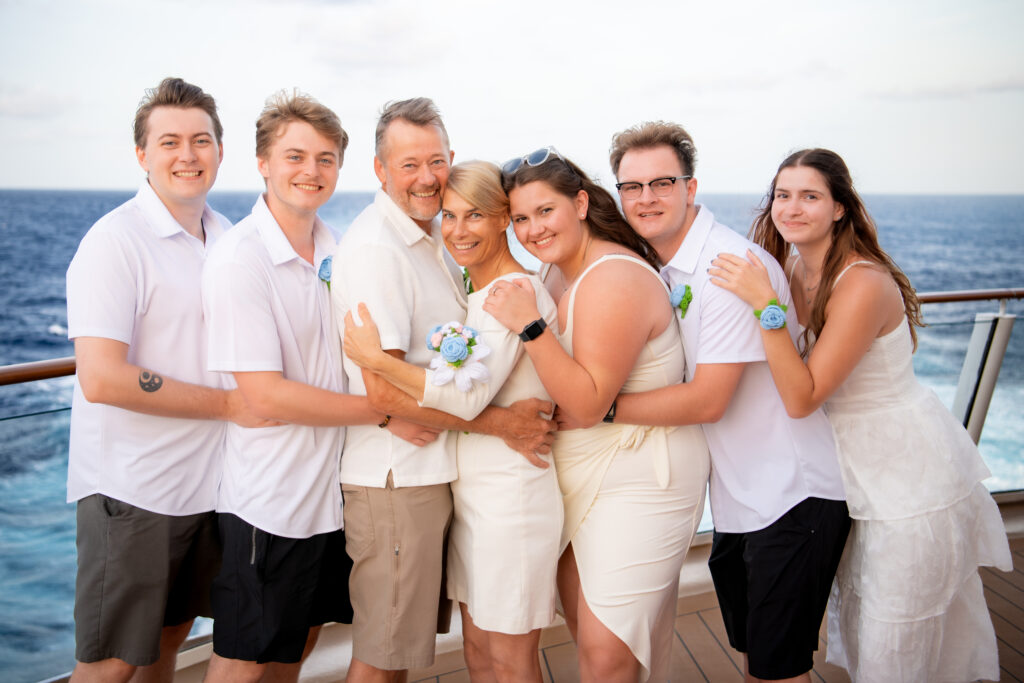
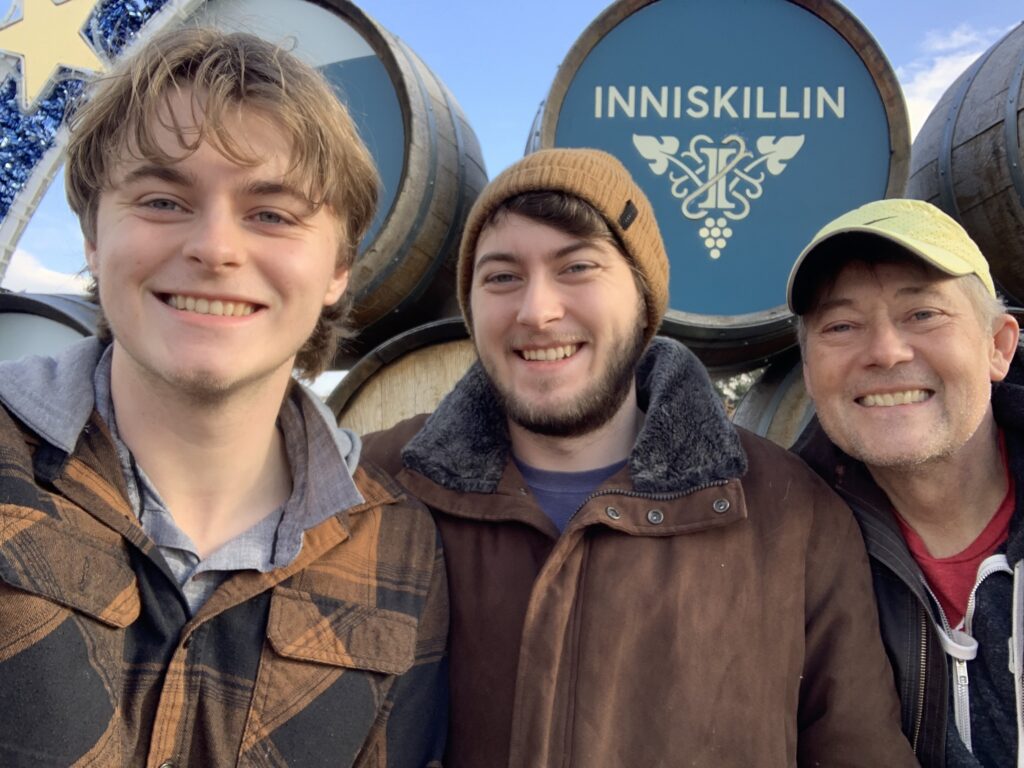
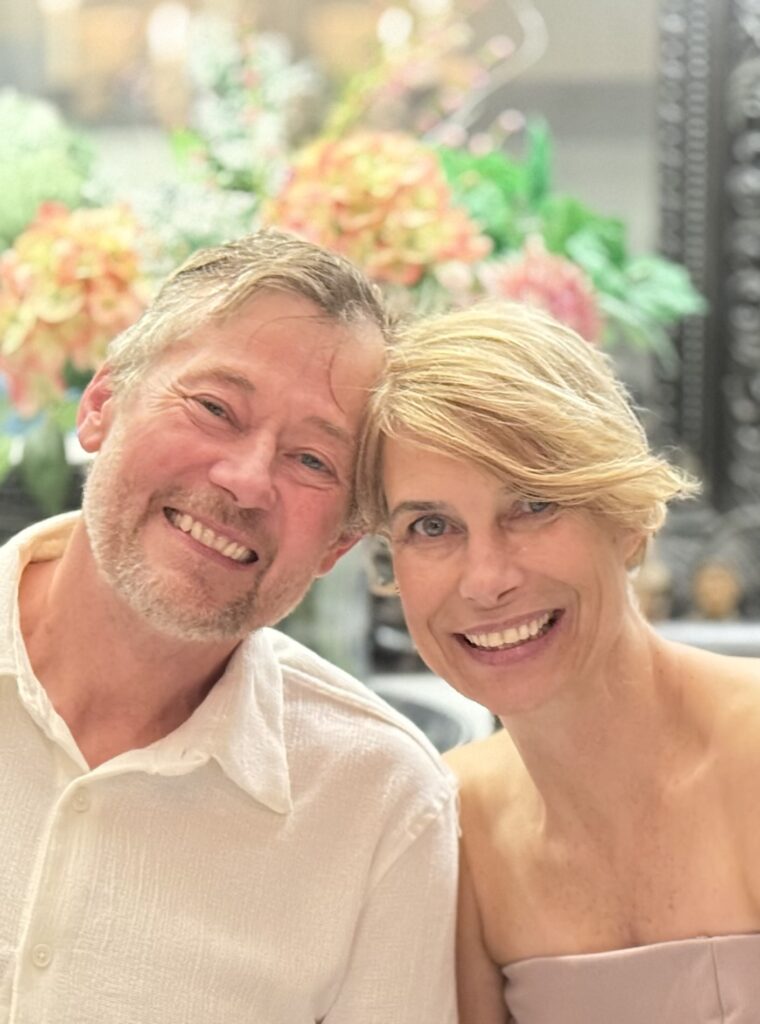
[Photo: My wife Tanya and I on our vow renewal cruise with our children Noah, Michael, Lauren, Hayden, and Megan.]
Once I got through it, I had a couple of years of great remission and just terrific amounts of energy. And I’ve had the benefit of being able to counsel about a half-dozen people before their own stem cell transplants. I tell them: hope for the best, prepare for the worst. It may not be rough for you, and I hope it won’t be. But I would rather you expect it to be difficult and have it be better than you thought, than to be in my situation: alone in a hospital, thinking something is terribly wrong, when actually that’s just how it goes.
I only got about two years out of the stem cell, which was disappointing. Scary, too, because you’ve read the materials and you know that first line of treatment is supposed to give you the deepest, longest remission.
But my second line, isatuximab, is coming up on three years now, and it’s already done better for me than the stem cell. I just want to keep riding this wave.
MC: What keeps you going day to day?
Brent: Staying active is a huge part of it. After back surgery, I honestly didn’t know if I’d ever run or cycle again. Eventually, I remember getting on my mountain bike and making it around the block, and I had tears running down my face and a smile painted on it. Just absolute joy! I thought, okay, I’m going to be alright. I can do this.
My oncologists in both St John’s and London give me the same advice: stay strong. The healthier I am, the more options we’ll have when this treatment eventually stops working. Weight training in particular is so beneficial for mental health. That’s something that doesn’t get talked about enough with myeloma: the anxiety before every oncologist appointment, holding your breath over the numbers. It’s hard. But exercise consistently steadies me.
I also found that reframing my relationship to the disease helped enormously. I started to think: I’m the CEO of this cancer. The doctors are my VPs. They advise, but ultimately I’m deciding what I’m going to do. My friends, family, and Myeloma Canada are my support network. But ultimately, this is mine, and I need to own it. When I made that shift, it brought me incredible peace.
MC: Tell us about the Transplant Games.
Brent: When I was coming through my stem cell transplant, a buddy of mine who’d had a kidney transplant told me I’d be eligible for the Transplant Games. The challenge of being able to do something like that was like electricity going through my body. But at the time, it was only open to donor-based transplants, and I had an autologous transplant (which used my own stem cells). I called the organizers anyway, and they said there was talk of opening it up. So I waited.
Last year I got word: they’d opened the Games to autologous stem cell recipients. I registered immediately. And off to Dresden, Germany we went.
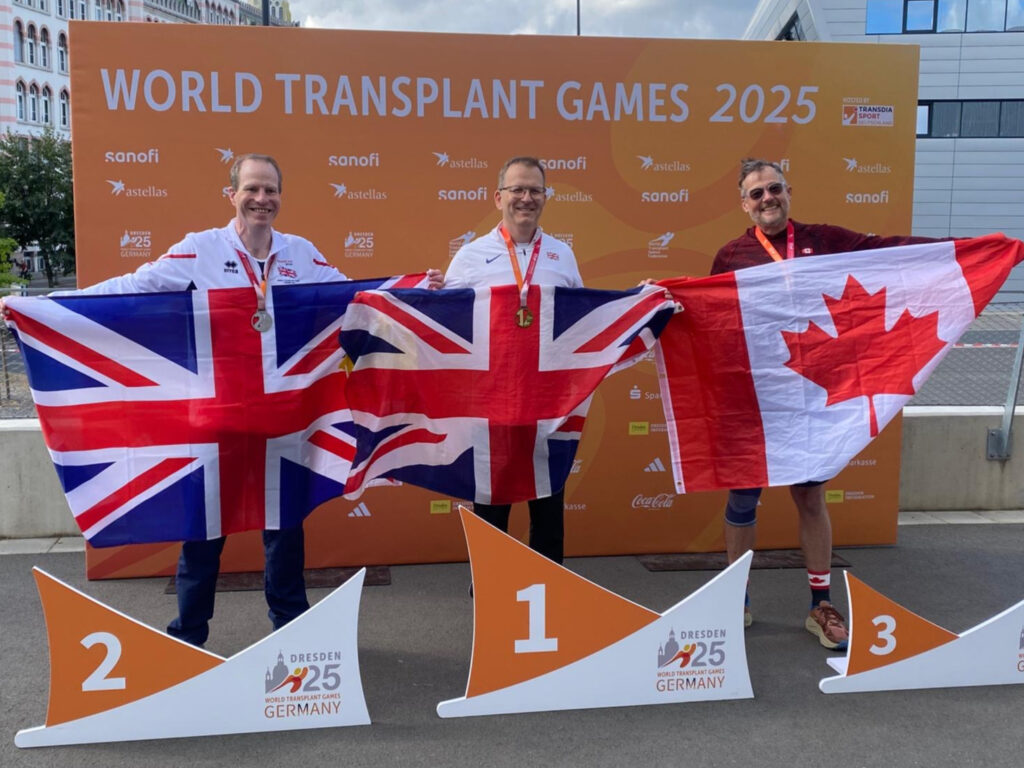
I competed in discus and cycling events, but then I injured my meniscus and wrenched my back, and it looked like I wasn’t going to be able to do the high jump. It was the event I was most excited about, because I was a high jumper in high school and did fairly well with it. I thought, despite the rods in my back, I bet I can still do this. The night before, I asked my wife (who is a nurse) to wrap my back and knee and have the painkillers ready for the morning, because I wanted to try. I competed in the high jump and came home with a bronze medal!
And that experience of competing for Canada, the parade of athletes through the streets of Dresden, waving the Canadian flag, clearing that bar and looking up to see my wife, my youngest son, and a crowd of Canadians who sounded like five hundred people…oh, it still gives me goosebumps.
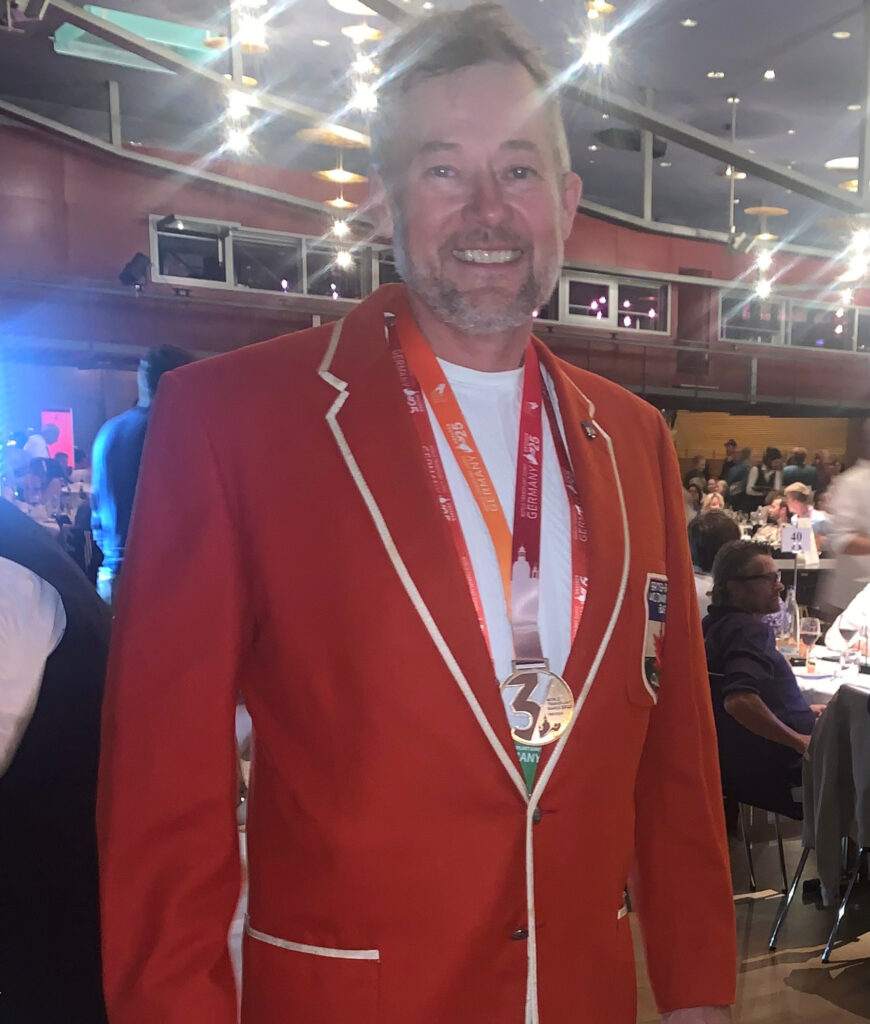
[Photo: At the Transplant Games in my late friend’s Commonwealth Games jacket.]
One of my dearest friends in Newfoundland, a former Commonwealth Games athlete and football player, had passed away not long before. Before he died, he gave me his Commonwealth Games jacket and said: I want you to wear it when you get on that podium. “If you’re going to win a medal, you better be well dressed.” I wore his jacket to receive my medal. It’s one of my most cherished possessions.
I can’t encourage people with myeloma who’ve gone through a stem cell transplant enough. Give the Games a go. Not all the events are triathlons. There’s pickleball, bowling, golf, all kinds of things that are quite accessible. This year the Games are in Sherbrooke, Quebec. I’m doing pickleball, cycling, high jump, defending my bronze, and trying javelin for the first time. I’m getting out, learning something new, and giving myself a reason to stay fit. That’s what it’s really about.
MC: Is there anything you’d like to say to others in the myeloma community?
Brent: To anyone, particularly if you’re a man in your fifties, who’s been living with unexplained pain and chalking it up to falling off the mountain bike or working too hard on the shed: get your head out of your rear end and go see a doctor. Mine was caught late. It could have been caught a heck of a lot earlier if I’d been more proactive.
To my fellow myeloma patients: never allow yourself to be a victim of it. Find a sense of control over it. I couldn’t think about anything else for probably the first year. It was just the constant fear of what was to come. But when I was able to make that change, to feel like I owned this, when I turned that corner, it got easier.