

January 22, 2026
Bonnie Hall
Living with High-Risk Myeloma: Nine Lines of Therapy and Counting
My name is Bonnie Hall, and this is my story. I am a myeloma patient, or as I like to think of myself, a Myeloma Warrior. Most people want to know how I knew something was wrong in the beginning, so let’s start there. In the months leading up to my diagnosis, I had been feeling incredibly tired, a different tired than I had ever experienced before. I remember telling my husband, “It feels like my bones are heavy.” I was living that expression “bone tired.” I was only 53 years old but felt like I was 83. So, I went to my family doctor who ran some bloodwork over a few months. And on April 11, 2016, I met with a hematologist at the Sunnybrook Odette Cancer Center in Toronto. I naively thought, how bad could it be, my appointment is with a hematologist not an oncologist.
I had never heard of multiple myeloma (MM) until that day. I still vividly remember the feeling of being told that I had an incurable cancer. At that moment, I had a complete out of body experience. It was as though my brain left my body, and I was looking down on the room below. It was the biggest shock of my life, but right from the beginning I was determined to do anything I needed to do to survive and thrive.
What I didn’t know at the beginning but found out over time, was that I have high risk myeloma. This means that the periods of remission for me tend to be shorter, and the treatment options ahead are fewer as time goes on. In the almost 10 years since my diagnosis, I have been on nine lines of therapy including: two stem cell transplants and D-PACE (high dose chemotherapy), as well as every class of therapy available at least once, including immunomodulatory, proteasome inhibitors, monoclonal antibodies, and bispecific T-cell engagers.
Why Research Matters
Fortunately, there are many treatment options available for MM, and advances in research have helped the doctors refine treatment protocols. Some of the “standard of care” treatments that I got when I was first diagnosed have been changed because of evolving the research. Mostly, they are finding that in most cases, more in combination is better. Meaning that adding a third or fourth medication to a regimen can increase the overall effectiveness of the treatment. And there are completely new categories like bispecifics, which have a different mode of action. In fact, the drug that is currently keeping me alive is a bispecific and didn’t exist as an option for Canadians a year ago. So, research and innovation matters. This is something that I have become very passionate about over the past few years, especially as I have started to run low on treatment options.
Anyone who is associated with MM knows that relapse is part of the disease. Even when the disease is stable and even undetectable, we know that it is not gone and after some period of remission, it will start to advance again. Each relapse requires a new treatment. For me, this has been one of the hardest aspects of the disease. Not knowing when the current treatment will stop working and when I will be in relapse, yet again. There is the stress of wondering when I will run out of treatment options, compounded with the life interruption of the more intensive treatments such as stem cell transplants and D-PACE. As a result, I have found that for me, the myeloma battle is at least 50% mental, emotional, and spiritual. I am blessed to have a large support network that helps keep me mentally fit, and for this I am very grateful. For those that do not have a network in place or who require more support, Myeloma Canada has a program that can help called MC Assistance.
(Editor’s note: MC Assistance is a free, bilingual, and private information line. Call 1-888-798-5771 or fill out an information request form, and a Myeloma Information Specialist will help you find information and resources or simply provide an empathetic ear)
“I am blessed to have a large support network”
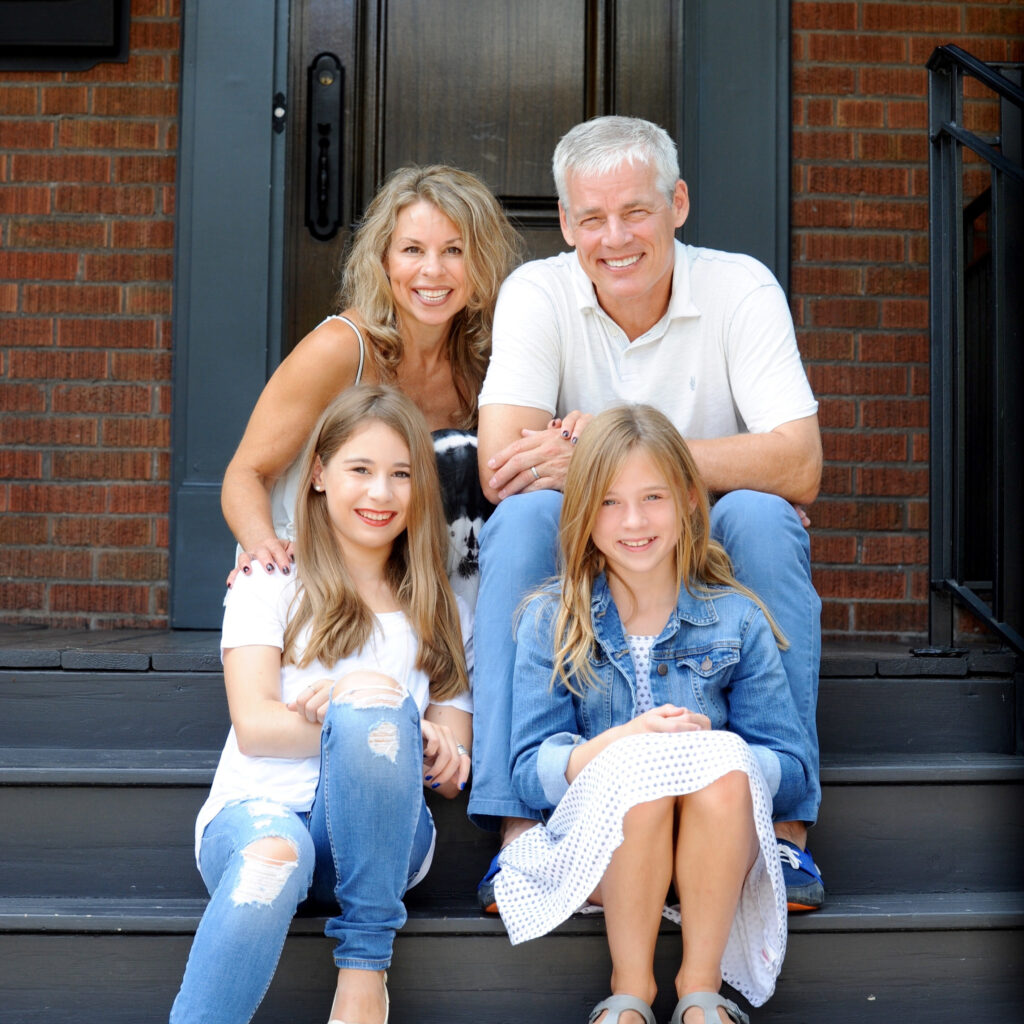
[Photo: Our family before multiple myeloma. With my husband Lindsey and our daughters Sydney and Paris in August 2015, a few months before my diagnosis.]
Quite naturally, my family and I have had to adjust our lives to accommodate all the twists and turns that myeloma throws at us. Our daughters were only 12 and 14 when I was first diagnosed, so they spent their formative teen years under the shadow of myeloma which couldn’t have been easy for them. My husband has been the most impacted, as he has been the one most closely involved in my journey. Our lives and futures are obviously the most intertwined.
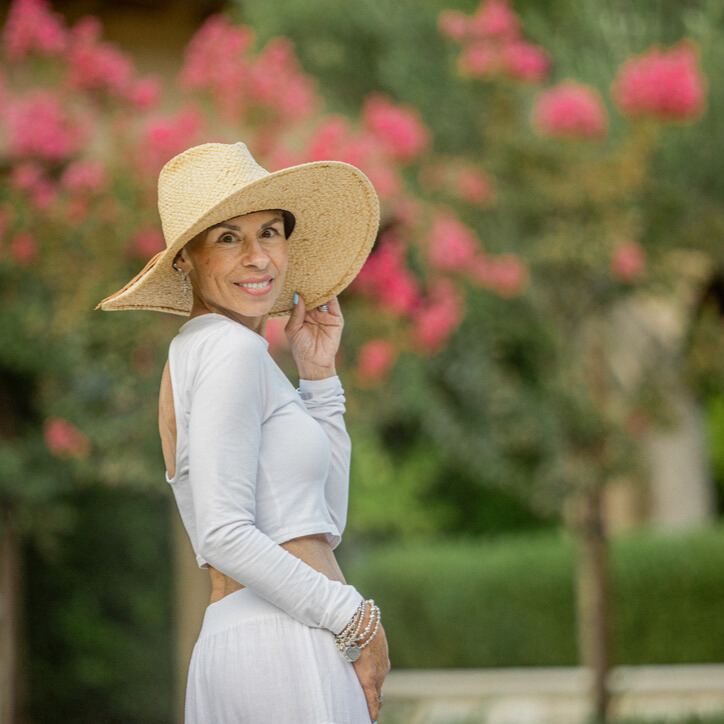
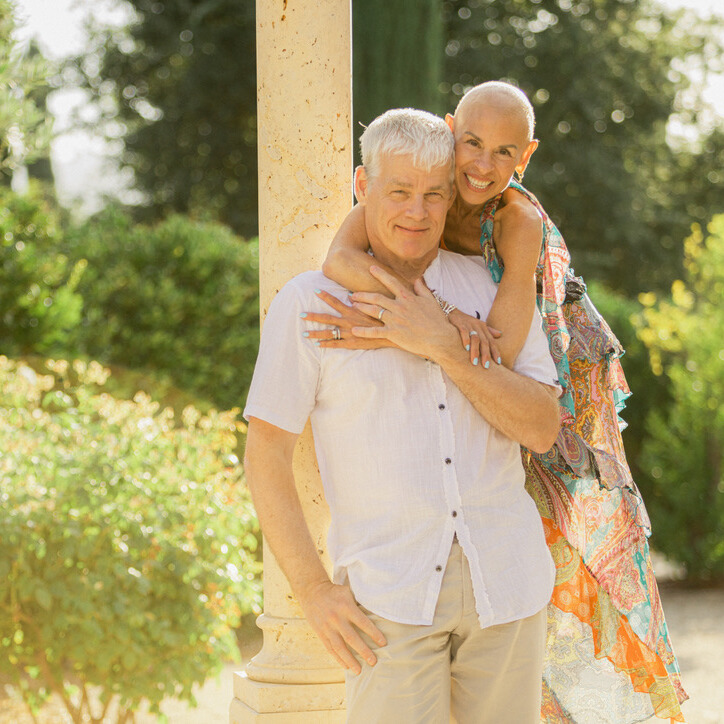
[Photo: With my husband Lindsey in Paso Robles, California celebrating our (belated) 25th wedding anniversary. August 2023, two months after my second stem cell transplant.]
I have a very precious memory from August of 2023. I had just come through my second stem cell transplant. It was my only option at that point, a bag of my own stem cells that had been collected in 2018. Despite a couple of life-threatening events, I rallied and once I was feeling better my husband and I flew to California for a belated 25th anniversary trip. We hired a photographer to capture that moment in time and whenever I look at the photos, I remember our connection and the sheer relief and joy we both felt that I had pulled through and was still alive.
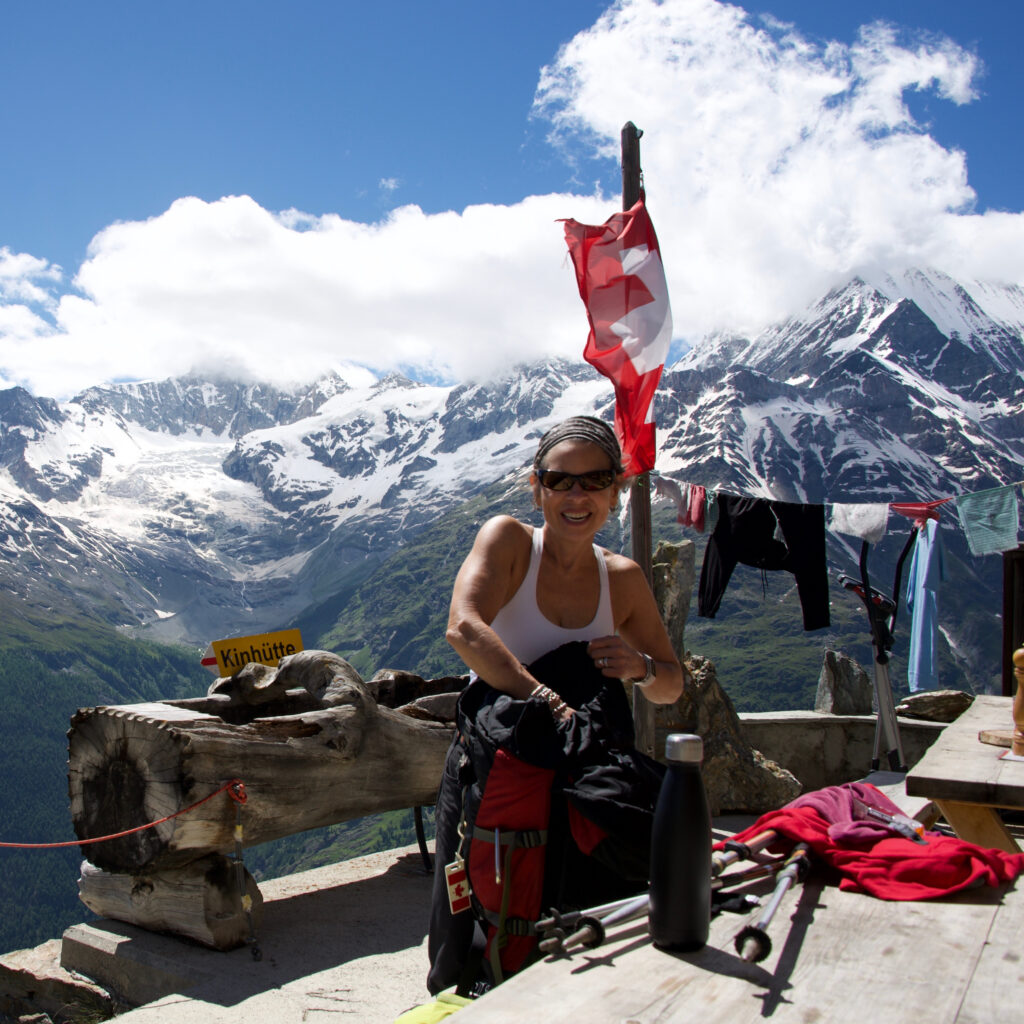
[Photo: Hiking in Switzerland with my husband Lindsey. July 2024, immediately after going into remission after treatment with teclistamab.]
Travel and adventure has always been one of our family passions and the nature of myeloma relapse means that it is difficult to plan too far ahead. So, when I am in a stable place with my myeloma, we tend to embrace the moment and travel as much as possible, making memories and exploring together. Especially now that our daughters are in their early 20’s, family time is at a premium and we take every opportunity to escape together.
[Photo: Modeling for Focused Studios in Toronto. March 2024, nine months after my second stem cell transplant. ]
One of my other major life priorities has always been fitness. I have been weight training and doing cardio in the gym since I was in university and have worked out four to five times per week ever since my early 20’s. The nausea (my Achilles heel) and weakness that I have experienced as a result of some treatments (mainly conditioning for stem cell transplants and D-PACE) have caused dramatic weight loss and more importantly, loss of lean muscle mass. Each time it has been a little harder to regain the lean muscle mass, especially when complicated by dysgeusia (altered taste) which makes eating well a challenge.

Changing priorities
When I was first diagnosed, I was running my own business, a successful healthcare consultancy firm, while concurrently starting up a second business in publishing. I was determined not to let the cancer treatments interfere with my personal or business life. Despite 26 consecutive weeks of CyBorD (cyclophosphamide, bortezomib and dexamethasone), followed by a stem cell transplant, I worked full on, full out that year and the following year, as I always had. As the years went on however, and the relapses started to occur closer together, requiring more time in the hospital — each treatment bringing its own set of challenging side effects — it became more difficult to work. Finally, I made the decision to wind down both businesses. I still remember the profound feeling of sadness I felt when I signed the paperwork to close the business I had started fifteen years prior. One more aspect of my life lost to myeloma.
Multiple myeloma has taken a lot from me. Among many things, it prematurely ended my career, it took my fit body (three times), my hair (three times), it destroyed the meibomian (oil) glands in my eyes so they are brutally dry all the time, it robbed me of the ability to plan very far ahead in my life as I never know when a relapse is coming and how difficult the treatment will be. But it has not taken my life and for that I am very grateful. It has also not taken my will to live, my fighting spirit or my hope. I have accepted life on life’s terms, exactly as it is today, and I have fully embraced the life that I do have for as long as I have it.
Giving back
That is why it is important to me to give back by fundraising for myeloma research specifically. I have been fundraising for the Canadian Cancer Society for the past few years and decided that in 2025 and going forward, I wanted to focus my efforts on something that would benefit multiple myeloma.
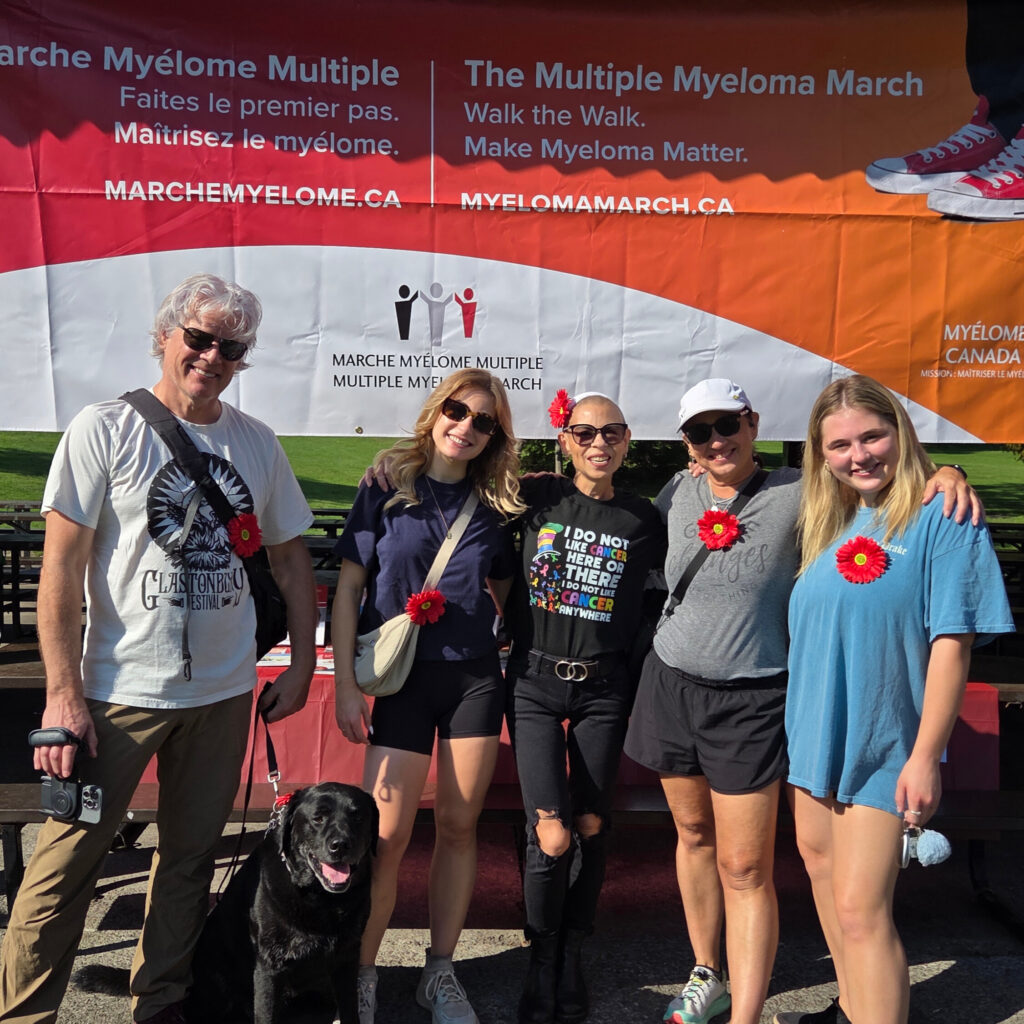
[Photo: My family including my sister Sharlene and our dog Maximus at the Multiple Myeloma March. October 4th, 2025.]
On October 4th, 2025, my family and I participated in our first Multiple Myeloma March. It seemed like the perfect opportunity to raise both money and awareness for myeloma. I have also become active in supporting the efforts of the Canadian Myeloma Research Group (CMRG), headed by Dr Donna Reece. Others that have gone before me have raised money that has resulted directly in innovation that is saving my life, and now it’s time for my family and I to do our part to raise money to keep that research going.
My story is one of hope. Our team for the Multiple Myeloma March was called Powered by Hope because I read somewhere that the most powerful word in the English language is the word hope. Hope is defined as an “optimistic state of mind that is based on an expectation of positive outcomes”. It’s been almost 10 years since my diagnosis, and I have every reason to be optimistic and to expect positive outcomes ahead.
Link to my Instagram Reel. A peek into the beautiful and ugly face of cancer after nearly 10 years.