
November 27, 2025
Andrew Gray
Living with whatever comes my way
My name is Andrew Gray and I was diagnosed with myeloma when I was 67 years old. It was back in 2017 when I first noticed something was off. I was out exercising and realized I just couldn’t do what I used to. I was losing energy, and it became obvious to me that something wasn’t right. I went to my family doctor and asked for a colonoscopy. I got the test done.
The colonoscopy came back fine, but the doctor who performed it noticed something unusual in my bloodwork. He said he’d send it to a hematologist. I didn’t think much of it at the time — I just said, “Okay, do whatever needs to be done.”
I went about life as usual and eventually I saw a hematologist at Oakville Hospital who ran more blood tests. When the results came in, they told me I had something called multiple myeloma and that there was no cure. Just like that. I had no idea what myeloma was or what this all meant.
I went about life as usual and eventually I saw a hematologist at Oakville Hospital who ran more blood tests. When the results came in, they told me I had something called multiple myeloma and that there was no cure. Just like that. I had no idea what myeloma was or what this all meant.
At the time, we were living in Ancaster, ON, and I still receive care at Juravinski Hospital today. I was referred to an oncologist who recommended I have a stem cell transplant. The issue was that I had recently suffered a heart attack – unrelated to the cancer – and had to wait a full year before I could undergo the procedure. This was because the medications I was taking for my heart weren’t compatible with the stem cell transplant, so we needed time for them work their way out from my system.
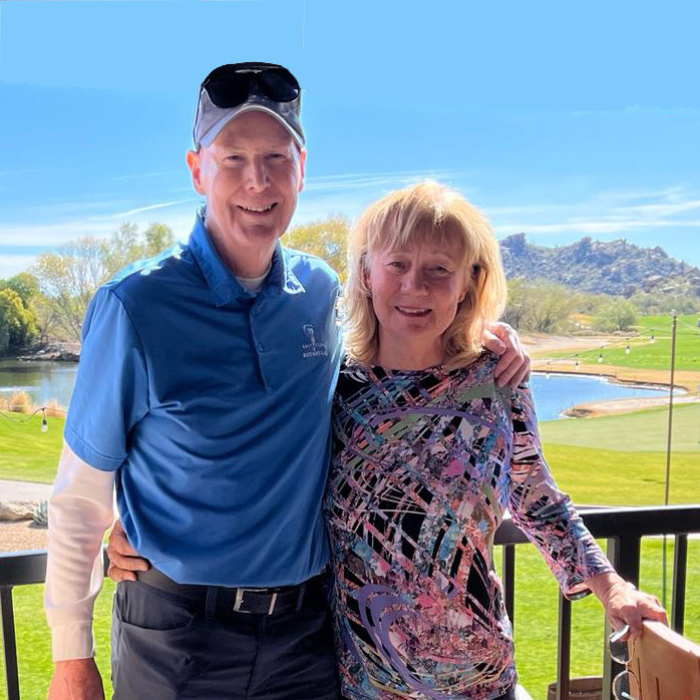
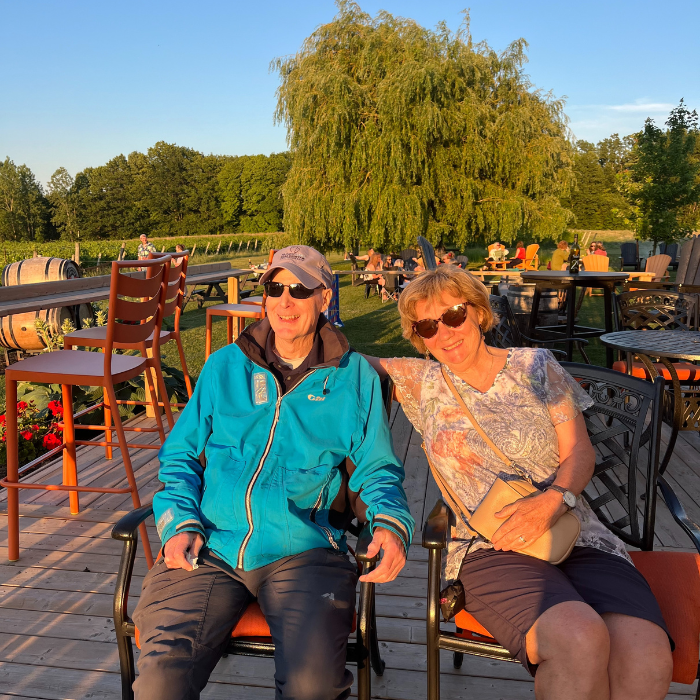
[Photo: Nancy and me, January 30, 2024 in Arizona]
Once I was cleared for the procedure, I went to the hospital weekly to have the stem cells removed from my blood. In August 2018, I finally had the stem cell transplant. They told me it would take about 100 days before I would feel like myself again, and they were right. I was pretty much tired all the time, couldn’t eat very much at all, and lost a lot of weight. Thankfully, by 2019, my energy came back!
I felt great for a couple of years. I remember thinking how worthwhile it was going through the transplant. I could basically live a normal life again! I was back to all the physical activity I used to do.
This lasted for only two and a half, maybe three years, which seems to be my average for each drug therapy I’ve been on.
I needed a new drug to keep fighting the cancer. I was put on daratumumab which worked well for a while. But, after a few years, I started experiencing spinal pain and other issues. We knew what that meant — the drug had stopped being effective. That’s what happens: the cancer cells adapt, and the myeloma takes over again.
At the end of 2023, I started a new line of therapy called pomalidomide, a chemotherapy pill that I am still on today. I take it daily for three weeks, have a week off, then see my doctor, and the cycle continues. Like so many people with myeloma, I also take dexamethasone once a week to help with inflammation in my body.
According to my doctor, for my particular situation – because every person is different – I’ve exceeded pomalidomide’s average period of effectiveness. But for now, it’s still working. We don’t know what to expect in terms of how long it will be before my body no longer responds to it, but we’ll keep going as long as we can.
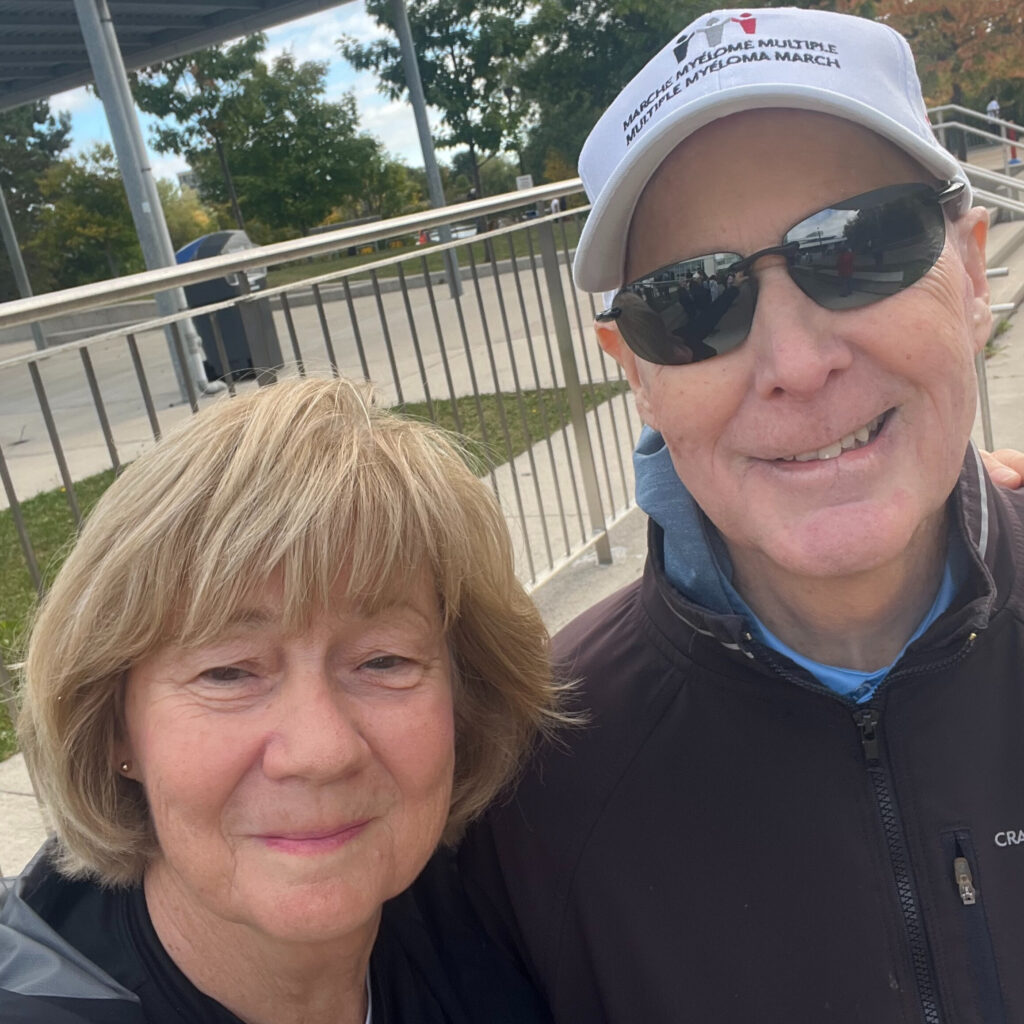
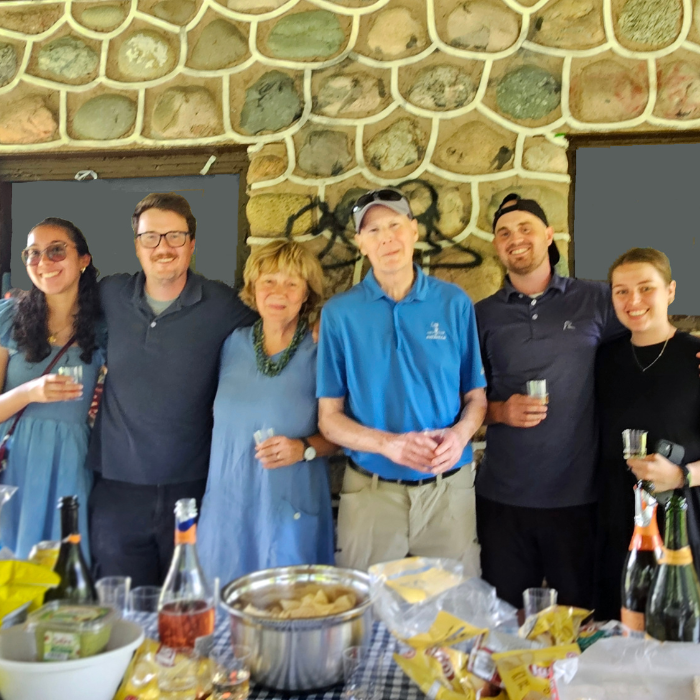
[Photo: Nancy and me, Sept 20, 2025 at the Mississauga Multiple Myeloma March]
My wife Nancy and I have had many discussions with my doctor planning out next steps. I feel lucky to have the doctor I do. We’ve been advised that the next treatment I should have is CAR T-cell therapy.
CAR T-cell therapy is a one-time treatment and can last for many years. Imagine! No treatments for years. As a cancer patient, this means that Myeloma Canada’s vision, life uninterrupted by myeloma, could be my reality!
At first, I was nervous about CAR T-cell therapy, but I did my research, attended seminars, learned about the side effects, and how it works. The more I learned, the more I felt encouraged and hopeful. Clinical trials and patients in other countries have shown amazing — and in some cases, curative — results from the treatment.
Imagine how shocked Nancy and I were when we found out that Carvykti®, a very effective and promising new CAR T-cell therapy will not be available to Canadians with myeloma, even though it was approved by Health Canada in 2023! The reason? Reimbursement and price negotiations were terminated without reaching an agreement. Bureaucracy is literally playing with our lives.
It’s more than frustrating. It’s like a door being slammed in your face. Canadians with myeloma, like me, have the right to the treatments we need to live. Myeloma Canada is working hard on our behalf to change this so we can get access to these drug therapies that could possibly save our lives. We need as many people to come together to write emails to their provincial and/or territorial representatives to restart Carvykti® negotiations and make us, the patients, the priority. (Learn more about their Carvykti® email writing campaign.) I’m also helping Myeloma Canada with their Giving Tuesday Blitz to help raise funds to further their Carvykti® advocacy campaign.
That’s the reality of living with myeloma — you face it day by day and stay hopeful that something new will come along, and that you’ll actually have access to be treated with it.
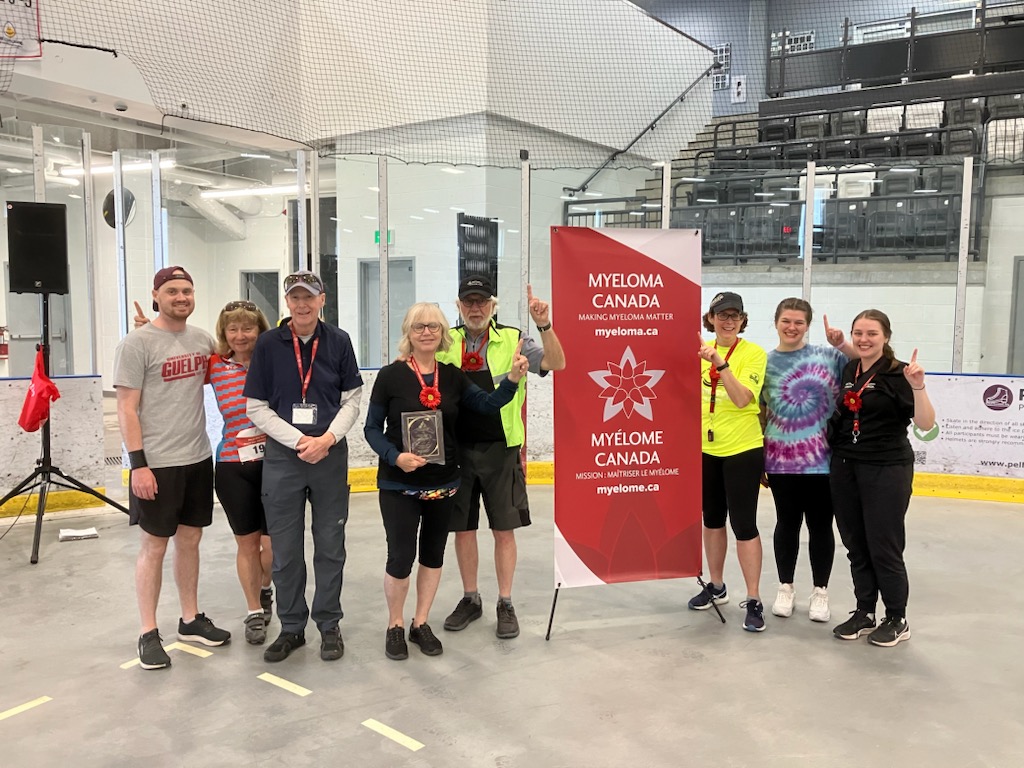
[Photo: The Niagara Region Myeloma Canada Ride in 2024]
All in all, I do consider myself fortunate. There are so many more treatments available today than 25 years ago. Given my situation, I really don’t know if I’d be here had I been diagnosed back then. Seeing the incredible progress being made helps me remain positive. And so does knowing that there are a lot of people working on our behalf, especially Myeloma Canada.
Every year since my diagnosis, my family and friends have participated in Myeloma Canada’s Multiple Myeloma March and Myeloma Canada Ride. The six first and second place team fundraising awards attest to the support I have received, which means so much to me.
I think more about the myeloma now, especially with the complications I’ve had. Before, I was more matter-of-fact about it. But everyone has their own way of coping. I’m living with whatever comes my way and finding ways to deal with it.
Thank you,
Andrew