



June 18, 2026
Updating Quality of Life Measures in Multiple Myeloma
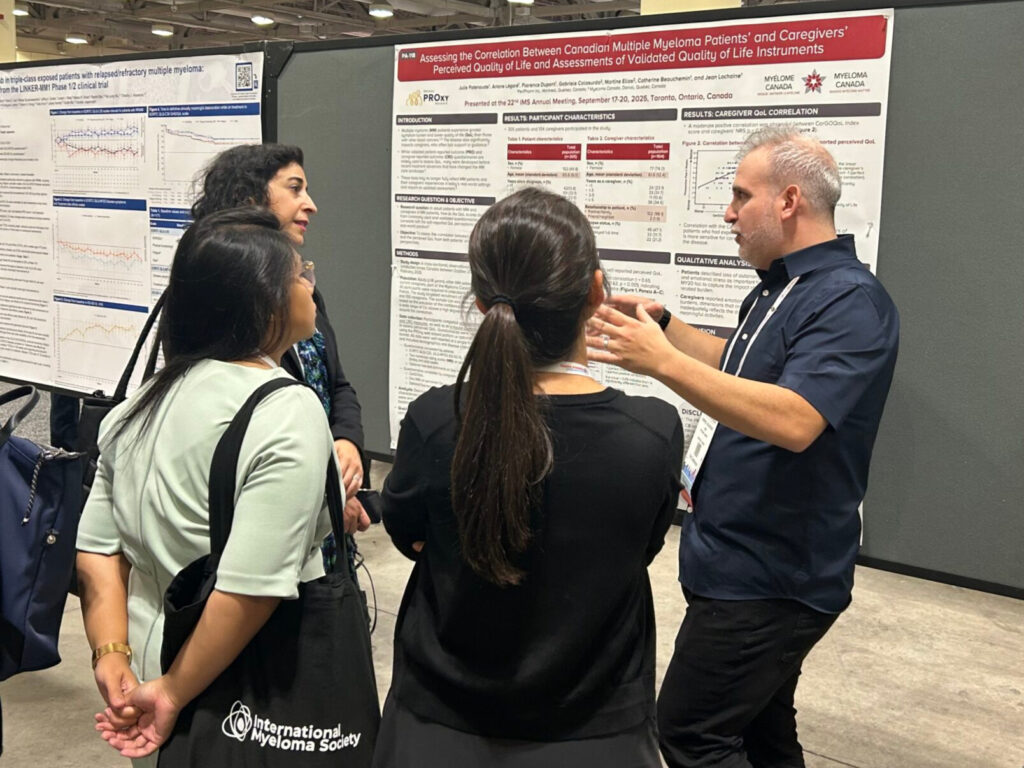
People with multiple myeloma are living longer. As treatments become more effective, it is important to capture what patients and caregivers truly experience in daily life and use that information to improve care, research, and decision-making. One way to do this is through patient-reported outcome measures, or in short, PROMs. Myeloma Canada supported a study to better understand whether current PROMs accurately reflect these real-world experiences. We are grateful to all the patients and caregivers who shared their experiences and made this research possible.
What are PROMs?
Patient-reported outcome measures (PROMs) are questionnaires that ask patients and caregivers about symptoms, daily life, and overall well-being. They help researchers and healthcare teams better understand the impact of myeloma and its treatment in ways that blood tests or scans cannot show.
Many of the questionnaires used today were created before newer myeloma treatments became available, and the question was whether these questionnaires still reflect the current patient experience, or not. Myeloma Canada partnered with PeriPharm and the PROxy Network to evaluate whether these tools are still relevant. The study was supported by Myeloma Canada, with funding provided by AbbVie.
What was the recent study about?
Between October 2024 and February 2025, more than 300 patients and 100 caregivers from across Canada took part in a study to review the PROMs questionnaires for how well they reported on the patient experience. Participants completed commonly used questionnaires and also rated their own quality of life. The goal was to see how closely these questionnaires reflect how people actually feel by comparing the quality-of-life ratings with the data collected through PROMs. Do they match up? Is there a discrepancy?
What did the study find?
The study found that commonly used questionnaires do not fully capture the day-to-day impact of myeloma and its treatments for many patients and caregivers. While they provide useful information, they do not always match how people rate their own quality of life.
Patients and caregivers shared that important parts of their experience are often missing, including:
- emotional stress,
- isolation due to infection risk, and
- the ongoing burden of treatment.
Caregivers also described the impact on daily routines, mental health, and finances.
What comes next
These results highlight the need for updated tools that better reflect today’s myeloma experience. The study was presented at three national and international conferences and published in a peer-reviewed medical journal.
The next step is to work directly with patients and caregivers through focus groups to better understand what matters most and develop new questionnaires that are more relevant and meaningful.
Read the full manuscript: https://www.mdpi.com/1718-7729/33/3/174