


May 20, 2026
The Continuous Work of Advocacy
From the day Myeloma Canada was founded in 2005, our co-founder Aldo Del Col understood that advocacy was deeply important. He used to say, “If patients are not at the table, they are on the menu.”Over the past 20 years, we have continued his vision and use advocacy to ensure the voices of Canadians impacted by myeloma are heard clearly, respectfully, and consistently by those shaping healthcare decisions.
Advocacy takes many forms. Sometimes it is meeting with government officials and healthcare decision-makers to push for faster access to life-changing therapies. Sometimes it is supporting patients in sharing their lived experiences publicly. Sometimes it is mobilizing thousands of letters to provincial leaders. And sometimes, advocacy is simply ensuring that no patient feels alone or powerless while navigating a complex healthcare system.
At Myeloma Canada, we believe advocacy must always begin and end with patients.
Mobilization for Treatment Access
In the fall of 2025, patients, caregivers, support group leaders, volunteers, clinicians, and advocates mobilized across the country. We put out a call, asking you to email for your representatives and advocate for access to an innovative new immunotherapy. In just days, hundreds of letters were sent to elected officials. That quickly grew into thousands. By December, more than 5,600 letters had been written by Canadians demanding equitable access to treatment. These letters were a critical because they reminded decision makers that behind every policy discussion are real human beings waiting for treatment options that significantly impact their futures.
In the last two years, our efforts have contributed to the reopening of the Carvykti® (a CAR T therapy) negotiations between the pan-Canadian Pharmaceutical Alliance (pCPA) and the treatment’s manufacturer.
We have also pushed for the initiation of negotiations for two additional therapies: Blenrep for patients with relapsed/refractory myeloma, and Sarclisa for newly diagnosed myeloma patients ineligible for stem cell transplant. We are happy to report that our efforts have resulted in these products being now in full negotiations.
[Note: Blenrep was recommended for reimbursement in combination with bortezomib or pomalidomide, and dexamethasone (BVd or BPd). Sarclisa (isatuximab) was recommended in combination with bortezomib, lenalidomide and dexamethasone (IsaVRd).]
Space for Community and Collaboration
Advocacy also means creating spaces where patient voices can grow stronger together. Initiatives like Health eMatters (Registration is now open.) continue to play a critical role in advancing patient leadership and strengthening the broader cancer advocacy community in Canada. Michelle Oana who spearheads Health eMatters notes, “These patient advocates are the voices and thought leaders in this space. They represent the lived experiences, priorities, and needs of thousands of patients across the country.” That statement reflects something we strongly believe. Lived experience is expertise.
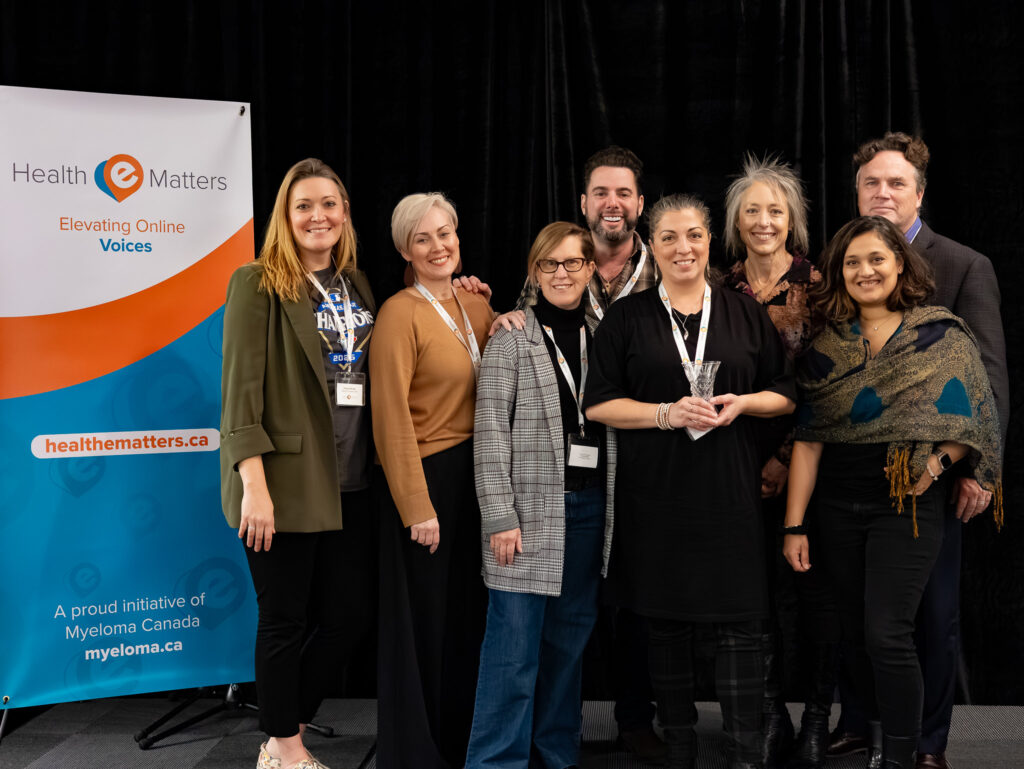
[Photo: Health eMatters steering committee and Myeloma Canada staff (left to right) Chantel Wicks (Myeloma Canada), Michelle Burleigh, Alyssa Dickey, Peter Bovolaneas, Michelle Oana (Myeloma Canada), Lisa Machado, Alvina Nadeem, and Robert Hawke]
Our community members are not passive participants in the healthcare system. They are informed, engaged, and increasingly influential partners helping shape better outcomes for Canadians affected by myeloma.
There is Still Much Work to do.
Too many Canadians continue to face delays in access to therapies because of where they live. Too many patients still struggle to navigate fragmented healthcare systems while coping with the emotional and physical realities of myeloma. Too many caregivers continue to carry enormous burdens quietly and without enough support.
This is why advocacy remains essential.
Advocacy is how we help create a healthcare system that better reflects the realities of patients and families. It is how we challenge inequities, accelerate progress, and ensure innovation reaches people who need it most. It is how we honour the trust our community places in us every day.
At Myeloma Canada, we do not take that responsibility lightly.
Goodbye Jessy and Thank you for Everything
Before closing, I want to recognize someone who has helped shape Myeloma Canada’s advocacy leadership over the past several years. In early June, Jessy Ranger, Director of Patient Programs, Health Policy & Advocacy will be leaving our organization, and while we are excited for her next chapter, she will be deeply missed.
Jessy has played an instrumental role in positioning Myeloma Canada as a respected and influential voice in conversations about improving Canada’s healthcare system and advancing patient-centred care. Jessy often says, “People living with blood cancers get the best of science and the worst of bureaucracy.” That quote not only reflects the challenges many patients continue to face, but also captures the passion and urgency she brought to advocacy efforts every single day. Whether contributing to conversations on market access, health technology assessment modernization, patient engagement, regulatory innovation, or real-world evidence, Jessy brought intelligence, credibility, collaboration, and deep compassion to every table she joined.
Her leadership has helped propel Myeloma Canada to the forefront of advocacy aimed at creating a more responsive, equitable, and patient-focused healthcare system.
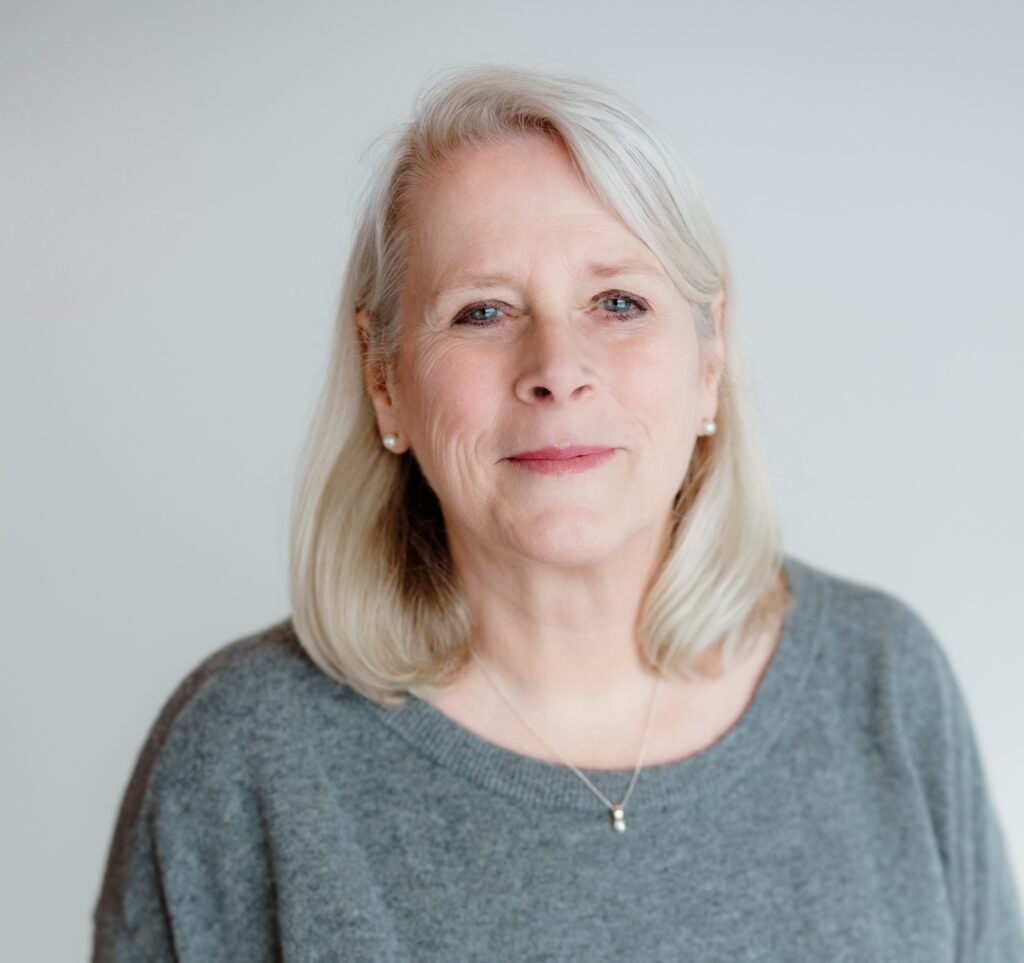
[Photo: Jessy Ranger, Director of Patient Programs, Health Policy & Advocacy, Myeloma Canada]
Jessy, thank you for your leadership, dedication, and unwavering commitment to patients. You will be greatly missed, and we wish you every success and happiness in this next chapter.

Warmly,
Martine