

November 27, 2025
Investing in the future of Canadian myeloma research: The impact of the Dr Andrew R Belch MEET Grant
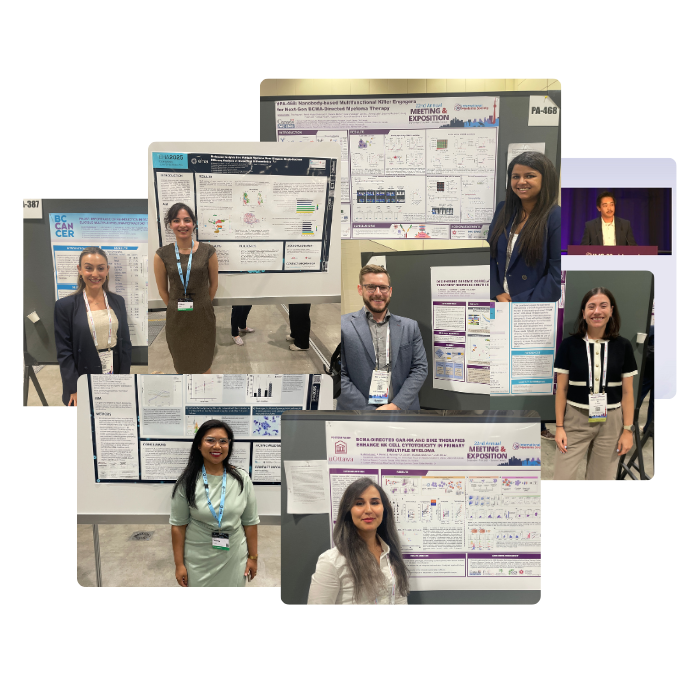
Since its launch in 2019, the Dr Andrew R Belch Myeloma Education and Enriched Training (MEET) Grant has been helping shape the future of multiple myeloma research in Canada. Created by Myeloma Canada under the vision of co-founder Aldo Del Col, the MEET Grant honours the legacy of Dr Andrew Belch — an esteemed clinician, researcher, and mentor — by supporting the next generation of myeloma investigators.
The MEET Grant provides financial support for young researchers to attend major scientific conferences, allowing recipients to present their work on the international stage, build professional networks, and gain exposure to the latest advancements in the field. The result? A stronger, more connected Canadian research community.
Here’s a look at the outstanding 2025 MEET Grant recipients and the innovative projects they’re leading.
Ariene Cabantog, PhD Candidate
Kuchenbauer-Rouhi Lab, Terry Fox Laboratory, BC Cancer Research Centre, University of British Columbia
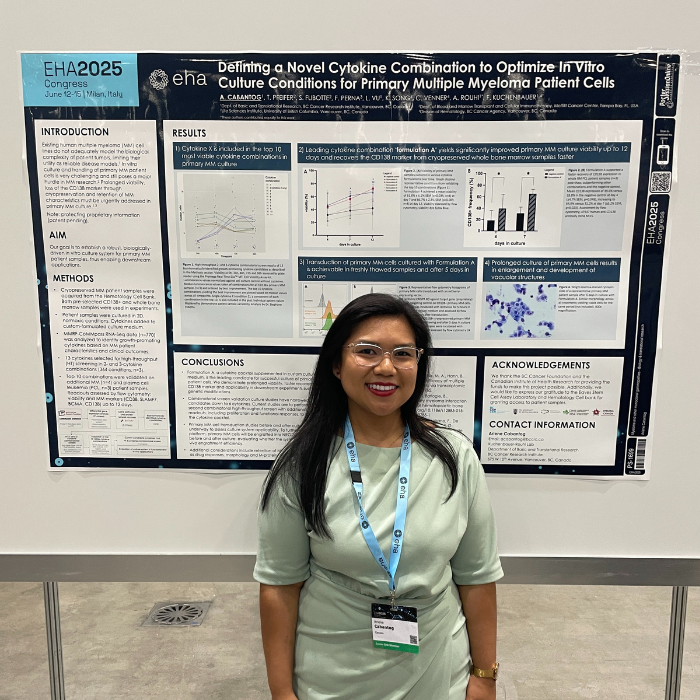
[Photo: Ariene Cabantog at the European Hematology Association (EHA) 2025 Congress (June 12 – 15, Milan)]
Ariene’s research tackles a long-standing challenge in myeloma research: how to grow patient-derived myeloma cells in the lab. Current models often fail to reflect the complexity of the disease, making it difficult to study and develop new treatments. Ariene is working to help the myeloma cells in the lab survive and behave more like they do in the body.
“Attending the European Hematology Association (EHA) Congress in Milan was a defining moment in my development as a multiple myeloma researcher,” she shared. “Presenting my work to an international audience elevated the visibility of Canadian myeloma research, fostered new collaborations, and strengthened my confidence as I transition toward postdoctoral training.”
Melika Bakharzi, PhD Candidate
Kuchenbauer-Rouhi Lab, Terry Fox Laboratory, BC Cancer Research Centre, University of British Columbia
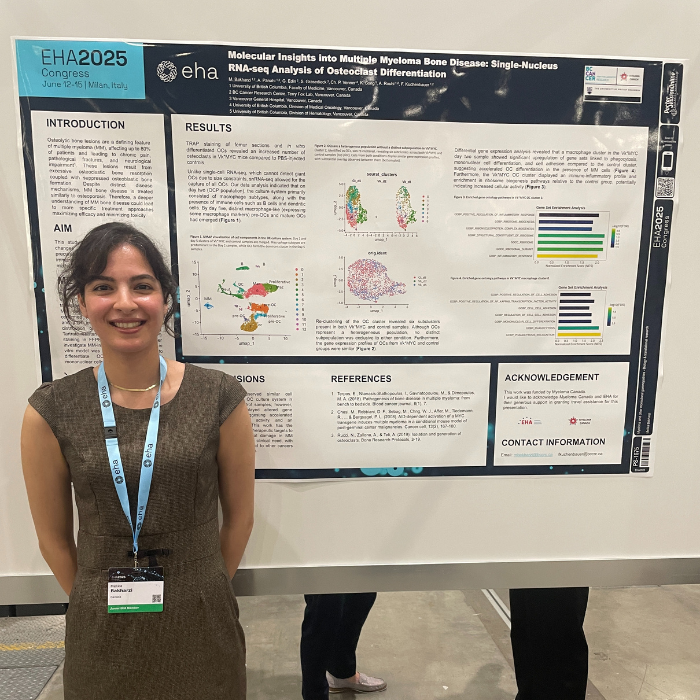
[Melika Bakharzi at the European Hematology Association (EHA) 2025 Congress (June 12 – 15, Milan)]
Melika’s work focuses on one of the most painful and debilitating aspects of multiple myeloma: bone disease. Up to 80% of patients experience bone lesions, which cause fractures, nerve damage, and chronic pain. Using gene sequencing technology, Melika is exploring how myeloma disrupts bone cell development, with the goal of identifying more targeted and effective treatments.
“I am sincerely grateful to the Dr Andrew R Belch MEET Grant for supporting my attendance at the EHA Congress in Milan,” she said. “This opportunity greatly enhanced my professional network and deepened my understanding of the latest advancements in myeloma research.”
Dr Andrée-Anne Pelland, Multiple Myeloma Fellow
BC Cancer, Vancouver

[Dr Andrée-Anne Pelland at the 22nd Annual International Society (IMS) Annual Meeting (September 17 – 20, Toronto)]
Dr Pelland led a real-world study on the use of BCMA-targeted bispecific antibodies (treatments like teclistamab and elranatamab) in British Columbia. These therapies have shown great efficacy in treating myeloma that has relapsed or become resistant to other treatments. The research evaluated how these therapies perform outside of clinical trials, offering valuable insights into their effectiveness in everyday clinical practice.
“I am extremely grateful to have been awarded the Dr Andrew R Belch MEET Grant to present my research at the 22nd Annual International Myeloma Society Meeting,” she said. “This helps promote exchanges with the medical and scientific community working together toward optimization of myeloma therapy.”
Ben J Patrick, MSc, PhD Candidate
Mer Lab, University of Ottawa
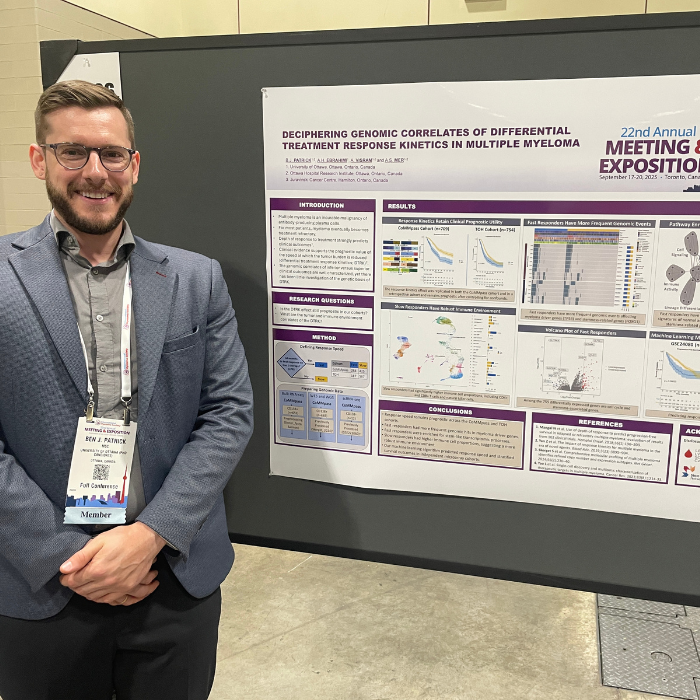
[Ben J Patrick at the 22nd Annual International Society (IMS) Annual Meeting (September 17 – 20, Toronto)]
Ben’s research explores why some patients respond to treatment faster than others. While depth of treatment response is an important factor, the speed of response may also be a critical factor. His study investigates the genetic and immune system factors that influence treatment responses, with the goal of improving personalized treatment strategies.
“Winning the Dr Andrew Belch MEET Grant is an incredible honour,” he said. “This support allows me to attend the IMS 2025 conference and the IMS 3rd Genomics Workshop, both of which will advance my learning and professional development and help me provide meaningful contributions to myeloma research.”
Ankita Dabla, PhD, Postdoctoral Fellow
Cancer Immunology Lab, National Research Council, Ottawa
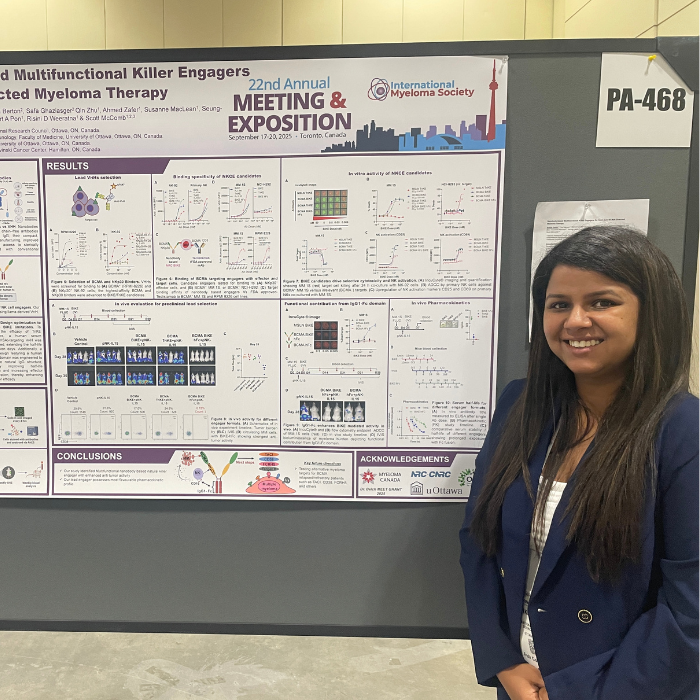
[Ankita Dabla, PhD at the 22nd Annual International Society (IMS) Annual Meeting (September 17 – 20, Toronto)]
Ankita is working on a new type of cancer treatment that uses the body’s natural killer (NK) cells — immune cells that attack harmful cells. She’s adding tiny, highly targeted molecules called nanobodies to help these NK cells find and destroy myeloma cells more effectively. These nanobodies lock onto a target called BCMA, which is found on myeloma cells, making the treatment more precise and powerful. This approach could open the door to safer, more effective therapies for people with myeloma.
“I am deeply grateful to receive the Dr Andrew R. Belch MEET Grant, which enabled my participation at the 22nd International Myeloma Society Meeting. This opportunity allowed me to present our advances in nanobody based NK cell engagers, exchange ideas with the international experts, and strengthen collaborations driving next-generation immunotherapies for multiple myeloma.”
Simin Ahmadvand, PhD Candidate
Lee Immunology Laboratory, University of Ottawa
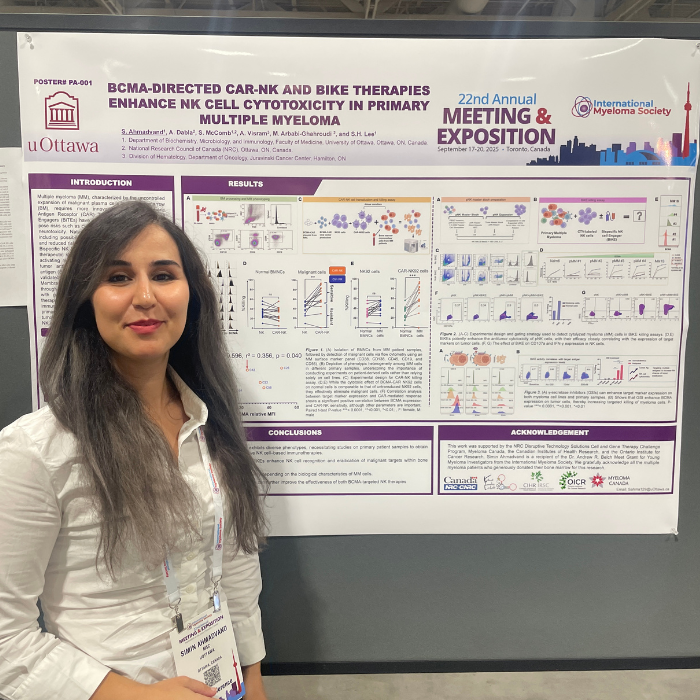
[Photo: Simin Ahmadvand at the 22nd Annual International Society (IMS) Annual Meeting (September 17 – 20, Toronto)]
Simin is developing advanced immunotherapies that boost the cancer-fighting power of natural killer (NK) cells. Her research uses two approaches: CAR-NK, which engineers NK cells to better recognize and attack myeloma, and BiKE, a molecule that acts like a bridge to bring NK cells closer to cancer cells. Both target BCMA, a marker on myeloma cells, and have shown strong results in lab studies — offering hope for safer, more effective treatments.
“Receiving the MEET grant made it possible for me to attend the International Myeloma Society meeting and present my poster on NK cell–based immunotherapies. It was an inspiring experience that connected me with scientists and patients in the myeloma community and reminded me why this research truly matters.”
Dr Daniela Di Francesco, Internal Medicine Resident
University of British Columbia
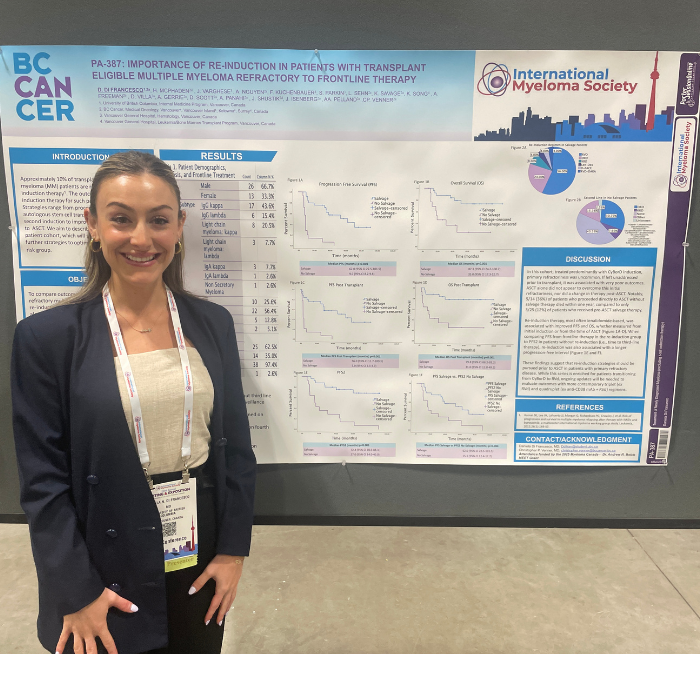
[Photo: Dr Daniela Di Francesco at the 22nd Annual International Society (IMS) Annual Meeting (September 17 – 20, Toronto)]
Dr Di Francesco’s research examined whether giving another round of therapy before a stem cell transplant can help patients whose myeloma is refractory to their initial treatment. This work could help refine treatment protocols and improve outcomes for patients who don’t respond to initial therapies.
Lorenzo Lindo, BSc, Visiting PhD Candidate
University of Calgary & University of British Columbia
Lorenzo is building a mouse model to study CAR T-cell therapy. Unlike older models, his system uses mice with intact immune systems, making it more realistic. This allows researchers to see how CAR T cells interact with cancer and the body’s defenses. His work has revealed important changes in the tumor environment, which could help design safer, more effective CAR T therapies for patients.
Building the future of myeloma research
By supporting these young investigators, the MEET Grant is doing more than funding travel. It’s opening doors to collaboration, visibility, and growth. It’s helping Canadian researchers share their findings with the world and bring the best ideas back home.