
August 21, 2025
Global myeloma research: Myeloma Canada’s takeaways from international meetings
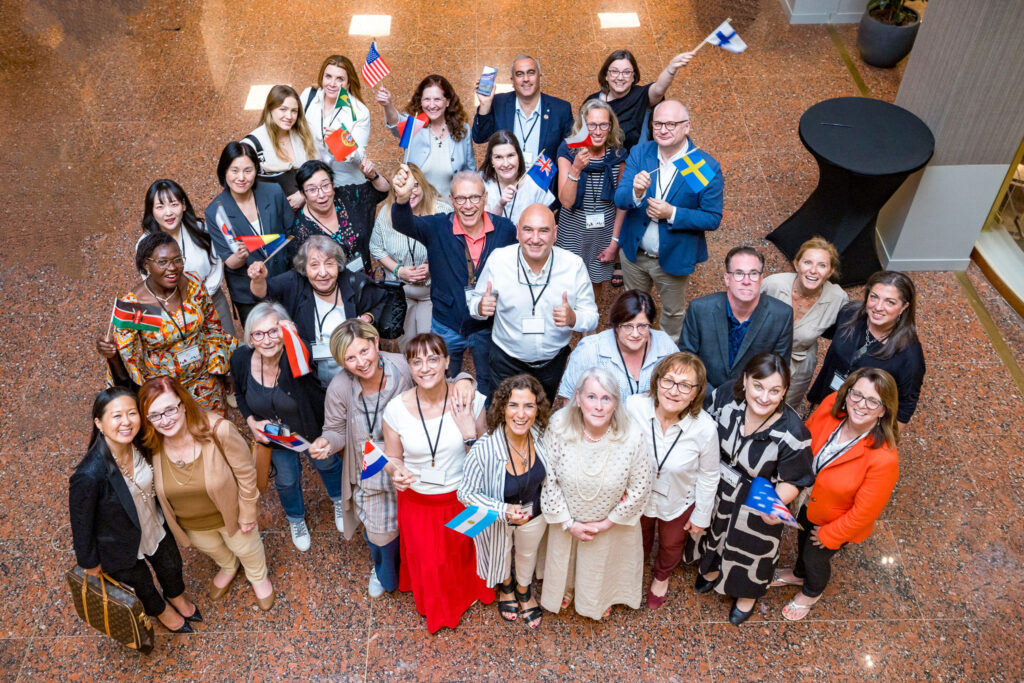
This summer, Myeloma Canada staff travelled to several international conferences to participate in important discussions with global leaders in multiple myeloma research and advocacy, and to share best practices. These conferences included Myeloma Patients Europe (MPe) Masterclass, Global Myeloma Action Network (GMAN) Summit, the International Myeloma Working Group (IMWG) Summit, and the European Hematology Association (EHA) Congress. Some very exciting findings were shared, as well as updates on research that could shape the future of how myeloma is treated. This article lists our key takeaways from those conferences.
Myeloma Patients Europe (MPe) Masterclass
Myeloma Patients Europe (MPe) held its Masterclass 2025 in Warsaw, Poland, from May 2-4, 2025. The sessions covered a wide range of topics, and we were proud to contribute our learnings from Canada, specifically relating to incorporating patient preferences in study design.
Patient preferences and how we can collaborate with our global partners
Martine Elias presented a poster (of which Jessy Ranger, Director of Patient Programs, Health Policy and Advocacy was a co-author) on the recently published, “A Canadian Best Practice example of Patient Group-informed Quantitative Preference Study Design Exploring Patient, Caregiver and Health Care Professional (HCP) Perspectives in the Treatment of Relapsed/Refractory Multiple Myeloma.” The poster described how patient involvement in study design is key to optimizing the relevance, quality, and impact of health research. This is reflected in the principle of ‘Nothing about us without us’, a call to action for meaningful engagement of those impacted by research findings in all stages of such research.
One type of patient input that can inform medical decision-making is patient preferences. Patient preferences reflect what matters most to patients, as well as the trade-offs they are willing to make between attributes of treatments or health interventions. For example, when considering the benefit of a drug that has the possibility of a longer progression free survival (PFS), a patient might prefer a longer PFS even if there is a risk of more side effects, or vice versa. A discrete choice experiment (DCE) was conducted to explore Canadian patient preferences for treatment options in relapse or refractory multiple myeloma (RRMM) in the era of CAR-T therapy, as well as caregiver and healthcare provider perceptions of these preferences.
The poster focused on the involvement and contributions of the patient organization (like Myeloma Canada) to study design.
Advocacy takeaways from GMAN
What is GMAN?
The Global Myeloma Action Network (GMAN) is a coalition of myeloma patient organizations representing over 40 countries. Established by the International Myeloma Foundation, GMAN collaborates with patients, caregivers, physicians, policymakers, and industry stakeholders to:
- Increase global awareness of multiple myeloma
- Improve access to timely diagnosis and essential medicines
- Promote capacity-building and best practices for member organizations
Addressing disparities in global access to new treatments
A major theme at GMAN was the disparity in access to new treatments globally. Data from Pharmaceutical Research Manufacturers of America (PhRMA) revealed a diversity in reimbursement models across the globe that creates inequities. The United States and Germany are leading in time to launch and reimburse new drugs, and Canada is initiating a pilot that explores a similar model to shorten the lead time it takes from drug listing to provincial reimbursement.
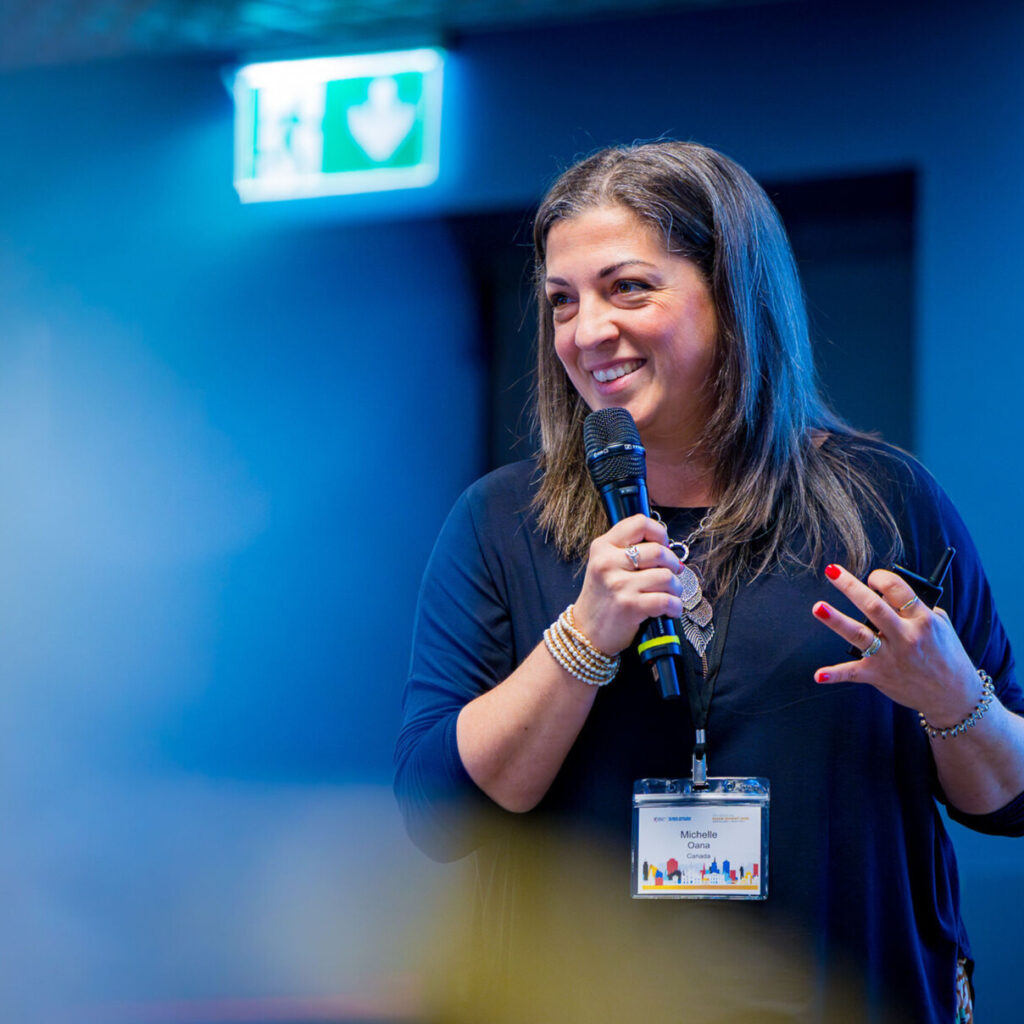
[Photo: Michelle Oana speaking at the GMAN Summit]
Myeloma Canada contributed to the collective discussions by participating in two panel sessions in advocacy and organizational best-practices.
Martine Elias, Chief Executive Officer, partook in the advocacy session discussing the importance of patient involvement in Health Technology Assessment (HTA) for drug reimbursement review processes, and how Canada is a leader in this space. Michelle Oana, Chief Mission Officer, discussed how organizations with limited resources can build strategic collaborations with like-minded partners, to advance their cause and achieve common goals.
Research and collaboration at the International Myeloma Working Group (IMWG) Summit 2025
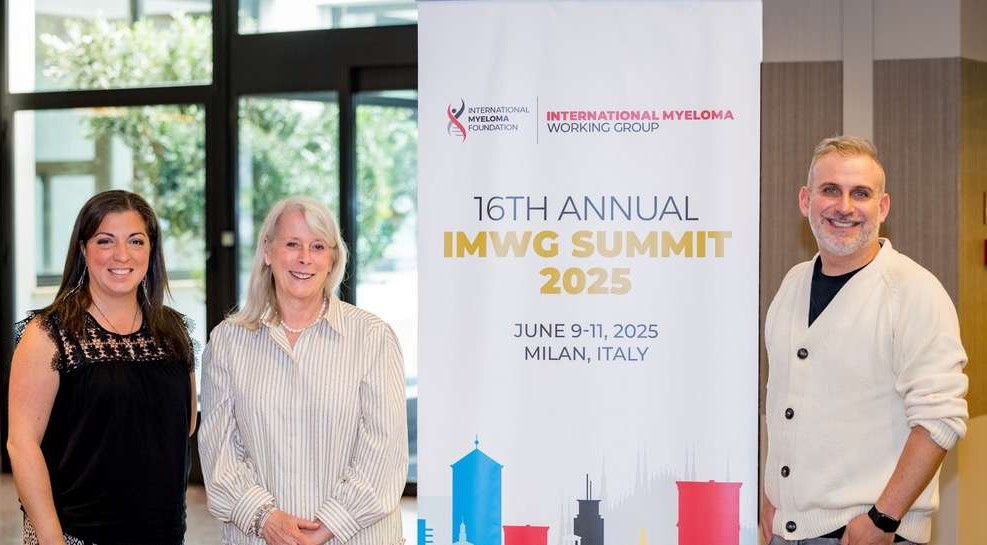
Held in Milan from June 9–11, the IMWG Summit brought together 345 researchers from 43 countries. Canadian participants included Dr Nizar Bahlis (Calgary), Dr Arleigh McCurdy (Ottawa), Dr Hira Mian (Hamilton), Dr Paola Neri (Calgary), and Dr Keith Stewart (Toronto).
New publications and key research discussions
Myeloma Canada’s participation in the IMWG Summit reflects our commitment to staying at the forefront of global research and innovation in multiple myeloma. We enjoyed learning about new publications and key research discussions that we can bring back to our Canadian myeloma community.
A new publication that might interest you:
Important takeaways you should be aware of:
- This was the first time we are hearing the word “cure” in myeloma discussions. During the conference we heard estimates of 10-15% of patients who are currently being treated possibly being considered “cured”. Some attendees even ventured to guess that with the upcoming treatments that number could raise as high as 30-50%. While the definition of cure is not a hard and fast definition, these conversations represent hope for so many people living with myeloma.
- Newly reported data shows that newly diagnosed myeloma patients may benefit more from starting treatment with a four-drug combination (versus the current standard of three drugs), followed by maintenance therapy with an anti-CD38 antibody (such as daratumumab or isatuximab) in combination with lenalidomide.
- Minimal residual disease (MRD) testing will become more mainstream in our treatment strategy.
- CAR T-cell therapy is emerging as one of the most effective treatments for relapsed/refractory. Along with other novel approaches (antibody-drug conjugates and bispecific antibodies), it is expected to be increasingly used in earlier lines of therapy and in a variety of combinations.
All of this will provide MANY more options for patients.
The 2025 American Society of Clinical Oncology (ASCO) Annual Meeting and the European Hematology Association (EHA) Congress
Although we did not attend ASCO there were many updates reported from this conference at the IMWG meeting which are worth mentioning here. We’ve selected a few takeaways of interest:
Key takeaway 1: There is real progress towards curing multiple myeloma.
CARTITUDE-1 trial: Long-term remission and survival after treatment with cilta-cel (Carvykti) CAR T-cell therapy
This trial showed long-term remission with cilta-cel (Carvykti) CAR T-cell therapy:
- Median overall survival: approximately 5 years
- 33% of patients were treatment- and progression-free. Some are calling this a “cure”; however the definition of cure remains nebulous.
- Studies CARTITUDE-5 and -6 are evaluating earlier use of cilta-cel in newly diagnosed multiple myeloma
The importance of these results is to highlight that patients receiving this therapy were heavily pre-treated, demonstrating that long remission and potential cure is now possible, even with patients who have relapsed several times prior to receiving this therapy.
Key takeaway 2: Combining more drugs with different mechanisms of action controls myeloma better.
Several trials in newly diagnosed multiple myeloma are evaluating quadruplets (4 drugs) as opposed to triplets (3 drugs) as initial therapy with promising results.
The PERSEUS Trial saw DVRd (daratumumab-bortezomib-lenalidomide-dexamethasone) vs VRd (bortezomib-lenalidomide-dexamethasone) induction treatment, followed by autologous stem cell transplant, and DR (daratumumab-lenalidomide) maintenance:
- More than doubling the number of patients with sustained MRD negativity (no myeloma cells found with advanced tests) at 12 months, 24 months, and longer.
- Leading to an estimated progression-free survival rate projecting 17.1 years vs 7.25 years with VRd.
Why this is revolutionary:
That is a lot of acronyms to parse, but those acronyms represent a big change. Models are projecting an estimated 17 years survival on a single line of therapy without experiencing a relapse, which to date, is unheard of in myeloma.
Furthermore, several first line trials are looking at the ideal treatment duration of myeloma drugs and how to de-escalate dosing or discontinue them, where possible.
Key takeaway 3: There is great progress in giving bispecific antibodies safely and more conveniently.
Strategies are being developed to better prevent or manage cytokine release syndrome (CRS) and neurotoxicity, and there is work being done towards outpatient management.
Key takeaway 4: Knowing your minimal residual disease (MRD) status is important.
MRD refers to the small number of myeloma cells that may remain in the body after treatment (often too few to be seen with standard tests). Highly sensitive laboratory technologies can now detect even one myeloma cell among 1 million normal cells in the bone marrow. If no myeloma cells are found with these advanced tests, this is called MRD negativity.
Reaching MRD negativity can be an important treatment goal, especially for people with high-risk myeloma. Moreover, several new clinical trials now use MRD results to decide whether to increase (escalate) or reduce (de-escalate) treatment.
Key takeaway 5: Bispecific antibodies are being combined with other drugs or other bispecific antibodies, including in earlier lines of therapy with promising results.
This is an important development because up until now, bispecific antibodies have been administered as a single agent (one drug). By combining them with other drugs, we see an increased effectiveness overall.
Key takeaway 6: New European Hematology Association – European Myeloma Network (EHA-EMN) myeloma treatment guidelines recommendations:
- quadruplets for first line therapy; and
- cilta-cel (CAR T) and belantamab mafodotin (Blenrep) combinations at first relapse
Key takeaway 7: Trispecific antibodies might be a game-changer
JNJ-5322, a phase 1 trial, targets CD3 (T-cell – a type of immune cell), BCMA (myeloma cell), and GPRC5D (myeloma cell). The trial showed improved or similar safety profile compared with bispecific antibodies targeting BCMA or GPRC5D alone.
Why is this a game-changer?
Bispecific antibodies currently hook on to two targets: one target on the myeloma cell, and one on the immune cell (T-cell). Trispecifics will add another target on the myeloma cell, making it even more powerful with potentially present fewer side-effects.
Key takeaway 8: Treating high-risk smouldering multiple myeloma (SMM) will be an option to consider
The AQUILA Trial (Daratumumab monotherapy (3 years) vs active monitoring) showed:
- Daratumumab significantly reduced the risk of progression to active myeloma or death by 51% versus active monitoring,
- Progression to active myeloma can be delayed and improve survival with 3 years of daratumumab monotherapy.
This regimen will likely be an option in the future in Canada.
What does this mean?
There is a possibility to delay or eliminate the progression to multiple myeloma in patients who are at higher risk of progressing to full blown myeloma if is caught and treated early. This is an important development towards actively preventing or delaying myeloma in patients who are at risk. Daratumumab monotherapy is now approved for high-risk SMM in the US and Europe.
Final thoughts
The landscape of multiple myeloma research is evolving rapidly. From global coalitions like GMAN to cutting-edge research at IMWG, ASCO, and EHA, we see a commitment to improving patient outcomes that is stronger than ever.
Key trends to watch:
- Quadruplet therapies becoming standard in frontline treatment.
- MRD status guiding treatment decisions and potentially reducing transplant reliance.
- CAR T-cell therapy showing unprecedented results, even in heavily relapsed patients.
- Bispecific and trispecific antibodies expanding options and improving safety.
As our founder Aldo Del Col aptly put it: “If you’re not at the table, you’re on the menu.” Our active participation in conferences like these ensures Canadians can benefit from the latest global advances in care, research, and advocacy. We will continue to attend these conferences, share our knowledge, ask the hard questions, and advocate for access to the most effective treatments.